




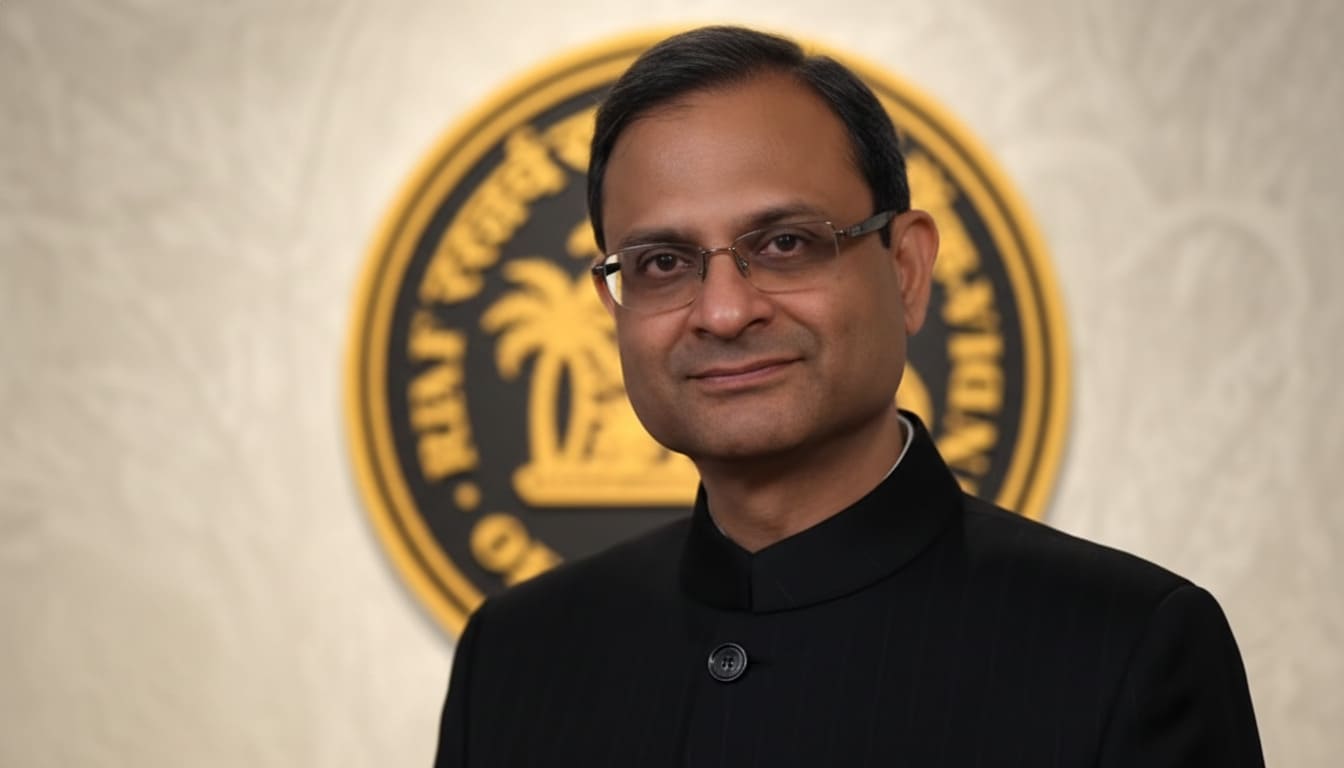
Under the leadership of Governor Sanjay Malhotra, the six-member Monetary Policy Committee (MPC) voted unanimously to maintain the status quo. After a highly active 2025—which saw a cumulative 125 basis point (1.25%) reduction in interest rates—the RBI has shifted its focus toward “predictability.”
By holding the repo rate at 5.25% and maintaining a “Neutral” stance, the RBI is essentially telling the market: “The heavy lifting is done; now let the economy breathe.”
1. The “Goldilocks” Scenario: Why the RBI Didn’t Cut Further
Many analysts were calling for a final “victory lap” rate cut of 25 bps, given that headline inflation crashed to a mere 1.3% in December 2025. However, the RBI chose the path of “strategic patience.”
- The Growth Engine: With GDP growth revised upward to 7.4% for FY26, the Indian economy is far from needing emergency stimulus. The RBI doesn’t want to overheat the market.
- The “Base Effect” Trap: While inflation looks low now, the RBI projects it will rise toward 4.0% in Q1 FY27 due to unfavorable base effects from last year.
- Global Headwinds: With the Rupee hovering near ₹90 against the US Dollar and geopolitical tensions shifting global trade routes, keeping some “dry powder” (the ability to cut later) is a smarter move than an immediate slash.
2. The Impact on Your Home Loan: Stability vs. Savings
For the average Indian homebuyer, the primary concern is the Equated Monthly Installment (EMI). Here is how the “Status Quo” affects different borrower profiles:
A. Existing Borrowers (Floating Rate/EBLR)
If your loan is linked to the External Benchmark Lending Rate (EBLR)—which most are since 2019—your EMI will remain unchanged.
- Respite from Volatility: After the 125 bps cuts in 2025, many borrowers saw their EMIs drop by roughly ₹80 per lakh. The February pause ensures these gains are “locked in” for the next quarter.
- The “Psychological Floor”: Knowing that the rate-cut cycle has likely bottomed out at 5.25% allows families to commit their surplus income to other investments rather than keeping it aside for potential rate hikes.
B. New Homebuyers (The Fence-Sitters)
If you were waiting for rates to hit 6% before buying, this policy is your signal to stop waiting.
- Predictability over Speculation: Leading developers like Anuj Puri (Chairman, Anarock) have noted that “predictability” is often more important for sales than the rate itself.
- The Window of Opportunity: With rates stabilized, you can now negotiate better “spreads” with banks. Currently, home loan lending rates are hovering between 7.3% and 8%, the lowest they have been in years.
3. The Real Estate Ripple Effect: Beyond the EMI
The RBI’s decision has sent a wave of “optimistic energy” through the construction and development sector.
- Inventory Liquidation: Stable rates encourage “end-users” (people buying to live, not just invest) to close deals. This helps developers clear the massive inventory of 3.9 lakh units launched in 2025.
- Lower Capital Costs for Builders: It’s not just the buyer who borrows. Developers rely on construction finance. Steady rates allow them to manage project cash flows without the risk of escalating interest costs, which often lead to project delays.
- Tier II and III Surge: In cities like Ludhiana, Jaipur, and Kochi, where housing is still relatively affordable, the stability of a 5.25% repo rate makes a much larger impact on the “affordability index” than in hyper-expensive markets like Mumbai.
4. Regulatory Perks: A Bonus for Urban Homeowners
Hidden in the fine print of the February 2026 policy were several regulatory “gifts” for the housing sector:
- UCB Lending Norms: The RBI has proposed rationalizing lending norms for Urban Cooperative Banks (UCBs), specifically removing certain tenor and moratorium requirements for housing loans. This will make it easier for middle-income groups in smaller towns to access structured credit.
- REITs and Liquidity: Rules for bank lending to Real Estate Investment Trusts (REITs) have been eased. This provides more “depth” to the commercial real estate market, indirectly supporting the overall health of the property sector.
5. The “Trade Deal” Context: A Stronger Rupee, Better Rates?
One of the key reasons Governor Malhotra cited for the rate hold was the recently inked India-US Trade Deal, targeting $500 billion in trade.
- How it affects you: Increased trade strengthens the Rupee. A stronger Rupee reduces “imported inflation” (the cost of oil and electronics). If this trend continues, the RBI may find room for one more symbolic rate cut toward the end of 2026, further lowering your home loan cost.
6. Managing Your Finances in a “Steady Rate” Era
Now that the RBI has signaled a “long pause,” how should you manage your debt?
- Check Your Benchmark: If you are still on the old MCLR (Marginal Cost of Funds Based Lending Rate) or the ancient Base Rate, you are likely paying 1–2% more than repo-linked borrowers. Use this period of stability to switch to an EBLR-linked loan.
- Pre-payment Strategy: Since rates aren’t dropping further for now, any extra bonus or savings should be used to pre-pay the principal. Even a 5% extra payment annually can reduce a 20-year tenure to 12 years.
- The “Neutral” Hedge: The RBI’s “Neutral” stance means they can move up OR down. While a hike is unlikely in 2026, keep your emergency fund ready to cover at least 6 months of EMIs.
Conclusion: A Supportive Window for the Indian Dream
The RBI’s February 2026 policy is a vote of confidence in India’s economic maturity. By choosing stability over sensation, the central bank has provided a solid foundation for the real estate sector.
For the homebuyer, the message is clear: The “interest rate shocks” of the past are over. With EMIs steady, inflation low, and a growth-focused budget in place, there has rarely been a more predictable time to invest in a home.
Executive Summary Checklist
- The Rate: Repo rate held steady at 5.25%.
- The Stance: Maintained at “Neutral” (Watchful and flexible).
- Direct Benefit: No change in EMIs for existing repo-linked home loans.
- Growth Outlook: GDP projected at 7.4%; Inflation under control at 2.1% for FY26.
- Housing Outlook: Positive “tailwinds” for both luxury and affordable segments due to cost certainty.