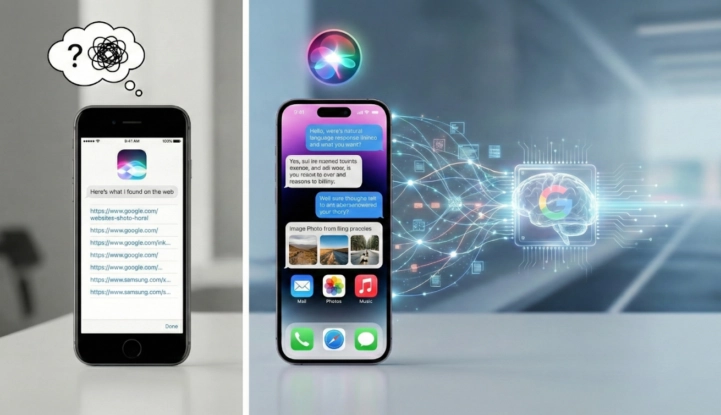





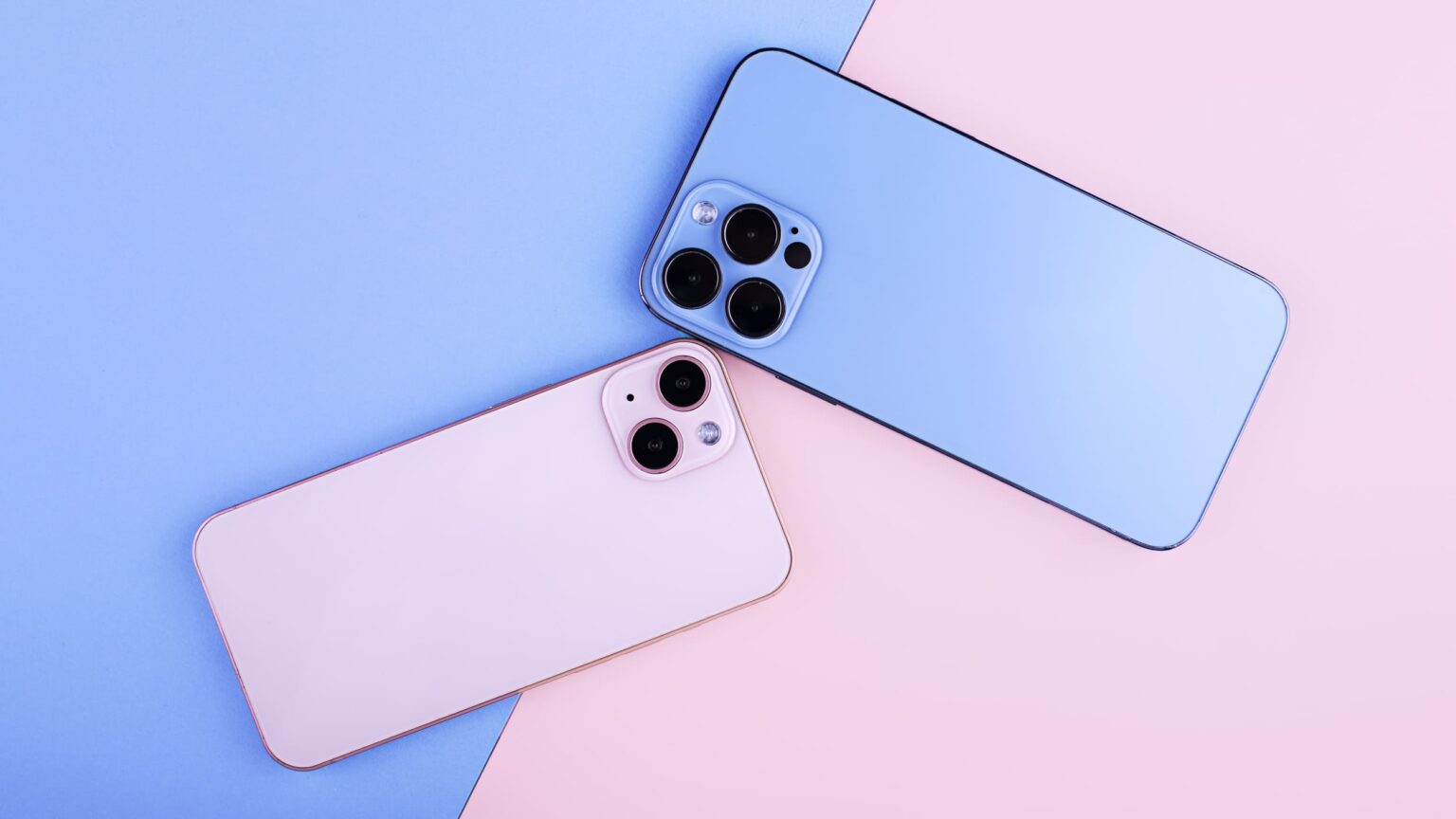
The consumer electronics industry stands at the precipice of a foundational transformation as leaks regarding the 2026 Apple hardware roadmap signal a departure from iterative updates toward a future-proof, all-screen aesthetic. This shift is not merely cosmetic; it represents a comprehensive effort to integrate cutting-edge semiconductor manufacturing with intuitive biometric engineering and a scalable optical system that seeks to automate professional-grade photography for the masses. The centerpiece of this breakthrough is the iPhone 18 Pro, a device designed to optimize the mobile workflow through the deployment of the A20 Pro chipset, the industry’s first 2nm application processor. By leveraging TSMC’s most advanced manufacturing node, Apple aims to disrupt the competitive landscape, providing a seamless bridge between local artificial intelligence and high-resolution imaging.
Architectural Dominance: Deploying the A20 Pro and 2nm N2 Process
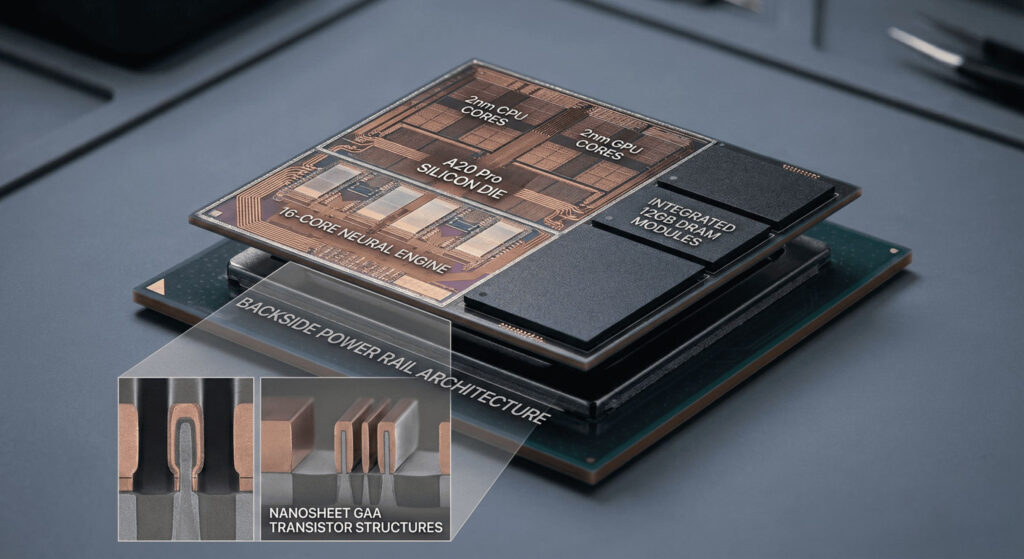
The internal hardware of the iPhone 18 Pro represents a significant breakthrough in the physics of mobile computing. The A20 Pro chipset is poised to be the primary engine of this transition, manufactured using the 2nm process, often referred to as N2. This manufacturing node is a departure from the 3nm FinFET architecture that has characterized recent generations, moving instead to a Gate-All-Around (GAA) transistor structure. The GAA architecture utilizes vertically placed horizontal nanosheets to surround the channel on all four sides, which serves to optimize current control and drastically reduce energy leakage. For the professional user, this translates to a device that can integrate high-intensity AI tasks into a seamless daily workflow without the thermal throttling that plagues current-generation hardware.
The implementation of the Backside Power Rail within the A20 Pro further enhances this efficiency. By moving power delivery wires to the rear of the silicon wafer, Apple is able to automate a more efficient routing of signal wires on the front, preventing the power bottlenecks that typically limit peak sustained performance. This technological leap is expected to deliver approximately 15% faster performance and a 30% improvement in power efficiency compared to the A19 generation. Such gains are critical for the deployment of “Apple Intelligence” features, which require massive computational throughput to maintain intuitive user interactions in real-time.
| Feature | A19 Pro (3nm) | A20 Pro (2nm) |
| Transistor Type | FinFET | Gate-All-Around (GAA) |
| Power Delivery | Frontside | Backside Power Rail |
| Performance Delta | Baseline | +15% |
| Efficiency Delta | Baseline | +30% |
| Packaging | InFO | WMCM |
| DRAM Integration | Separate Package | Wafer-Level Integration |
To further optimize the on-device AI workflow, the A20 Pro utilizes Wafer-Level Multi-Chip Module (WMCM) packaging. This cutting-edge approach integrates the CPU, GPU, Neural Engine, and 12GB of LPD5 DRAM directly onto a single wafer. By connecting these dies without the need for a traditional substrate or interposer, Apple achieves a scalable architecture that improves thermal dissipation and signal integrity. This integration is a critical hack for the memory-intensive nature of large language models, allowing for faster data exchange between the processor and the memory bank, which is essential for generative AI tasks that must remain intuitive and responsive.
Display Engineering: A Breakthrough in Under-Display Biometrics
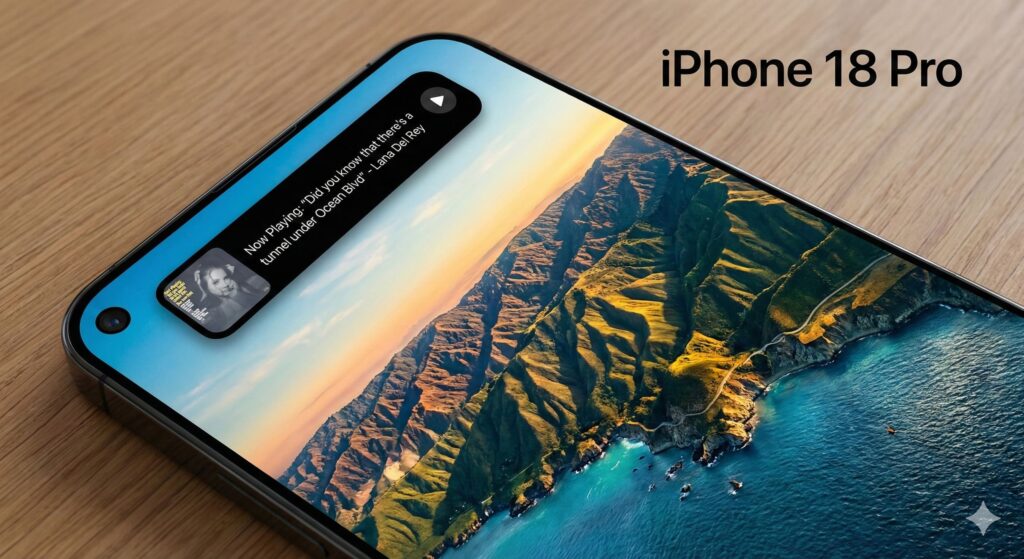
The most visible redesign of the iPhone 18 Pro involves a bold move toward a truly full-screen experience. For years, the Dynamic Island has served as a clever bridge between software and hardware, but the 2026 lineup intends to disrupt this status quo by moving Face ID sensors beneath the display. This transition is enabled by the use of spliced micro-transparent glass technology. This specialized material allows infrared sensors to function through the OLED panel without the distortion that typically hinders biometric accuracy. By achieving this, Apple can shrink the visible cutout to a single punch-hole for the selfie camera, creating a more immersive and seamless visual canvas for the user.
However, the placement of this punch-hole has sparked a debate within the technology community. Reports suggest that Apple is testing a prototype where the front-facing camera is relocated to the top-left corner of the display, rather than the traditional center-aligned position. While this shift allows for a larger contiguous display area, it has been described as a controversial departure from the symmetric design language that has defined the iPhone for a decade. Despite this hardware change, the Dynamic Island is expected to live on as a scalable software feature, adapting its size and shape around the new cutout to provide contextual updates for apps like Maps and Uber.
| Display Metric | iPhone 18 Pro | iPhone 18 Pro Max |
| Screen Size | 6.27 inches | 6.86 inches |
| Panel Type | LTPO OLED | LTPO OLED |
| Refresh Rate | 120Hz ProMotion | 120Hz ProMotion |
| Biometrics | Under-Display Face ID | Under-Display Face ID |
| Cutout Design | Corner Punch-hole | Corner Punch-hole |
| Glass Technology | Micro-transparent | Micro-transparent |
The standardization of 120Hz LTPO displays across the entire iPhone 18 lineup, including the base models and the rumored iPhone Air 2, represents a significant move to unify the user experience. By bringing high-refresh-rate technology to the more affordable models, Apple ensures a seamless transition for users moving between different devices in the ecosystem. This scalable approach to display technology is future-proof, ensuring that even the non-Pro models remain competitive with the high-end Android flagships of 2026.
Optical Innovation: Disrupting Mobile Photography with Variable Aperture
The camera system of the iPhone 18 Pro is set to undergo a revolutionary upgrade that brings it closer to the capabilities of a professional DSLR. The primary breakthrough is the introduction of a variable aperture system for the main 48MP Fusion lens. In traditional smartphones, the aperture is fixed, meaning the amount of light reaching the sensor is constant and can only be managed through software processing. The iPhone 18 Pro changes this paradigm by allowing the lens to physically open and close, giving users intuitive control over exposure and depth of field.
For the professional photographer, the ability to manually adjust the aperture is a game-changing hack for challenging lighting conditions. In bright environments, the aperture can be closed to prevent overexposure and achieve a deep depth of field, ensuring that every element from the foreground to the background remains in sharp focus. Conversely, in low-light scenarios, the aperture can be opened to its widest setting to capture the maximum amount of light, resulting in brighter, cleaner images with natural bokeh that does not rely on software-simulated blur.
| Camera Component | Specification | Function |
| Main Sensor | 48MP VA | Variable Aperture Control |
| Ultra Wide | 48MP | High-Res Landscape/Macro |
| Telephoto | 48MP Periscope | 8x Optical Zoom |
| Selfie Camera | 24MP | High-Res FaceTime/Selfies |
| Image Sensor | Samsung 3-Layer | PD-TR-Logic Stacked |
| Video Support | ProRes RAW / Log 2 | Professional Workflow |
This hardware-level control is particularly scalable for video workflows. Filmmakers can maintain a consistent shutter angle in bright daylight without the need for external ND filters, ensuring that motion blur remains natural and cinematic. Furthermore, Apple is reportedly integrating a new three-layer stacked image sensor from Samsung, which separates the photodiode and transistor layers to expand dynamic range and further reduce noise. This move toward a triple 48MP rear camera array ensures that the ultra-wide and telephoto lenses match the performance of the main sensor, providing a seamless and professional imaging experience regardless of the focal length.
Connectivity and Independence: The C2 Modem Breakthrough
Apple’s multi-year plan to reduce its reliance on third-party suppliers reaches a critical milestone with the deployment of the C2 modem. This in-house 5G modem is designed to optimize cellular performance while drastically reducing power consumption. Unlike the initial C1 modem, which was a beta-style test of Apple’s wireless engineering, the C2 is a future-proof solution that supports both sub-6GHz and mmWave 5G networks. This integration allows Apple to automate the switching between network bands more efficiently, ensuring that the device maintains the fastest possible connection without draining the battery.
A significant breakthrough of the C2 modem is its support for true 5G satellite connectivity. While previous iPhones offered satellite features for emergency services, the iPhone 18 Pro is rumored to support web browsing and more advanced data services via satellite constellations. This capability is a massive disruptor for users in remote areas or professionals who require reliable connectivity in regions with poor terrestrial network coverage. The C2 modem, built on TSMC’s 4nm process, is expected to outperform current Qualcomm solutions in terms of energy efficiency, contributing to the iPhone 18 Pro Max having the longest battery life in the company’s history.
| Wireless Tech | Component | Capability |
| 5G Modem | Apple C2 | sub-6GHz & mmWave |
| Satellite | 5G SatLink | Full Web Browsing |
| Wi-Fi | Apple N2 | Wi-Fi 7 / Bluetooth 6 |
| Process Node | TSMC 4nm | Energy-Efficient Comms |
| Connectivity | Thread | Smart Home Integration |
The C2 modem is paired with a new “N2” wireless chip that brings support for Wi-Fi 7 and Bluetooth 6. This combination ensures that the iPhone 18 Pro is fully equipped for the next generation of wireless peripherals and high-speed home networking. By integrating these components directly into its silicon roadmap, Apple can deploy a more intuitive and seamless handoff between cellular, Wi-Fi, and satellite networks, ensuring that the user remains connected in any environment.

Form Factor Diversity: The Foldable iPhone and the Ultra-Thin Air
The 2026 hardware cycle is not limited to the Pro series; it marks the debut of Apple’s first foldable iPhone, a device designed to disrupt the premium smartphone segment. The iPhone Fold is rumored to feature a book-style design that opens to reveal a massive 7.8-inch internal display, while maintaining a compact 5.3-inch outer cover screen. Unlike the Pro models, the foldable device is expected to feature a side-mounted Touch ID button rather than under-display Face ID, a tactical choice driven by the internal space constraints of the hinge mechanism.
To ensure a seamless experience, the iPhone Fold will be powered by the same A20 Pro chipset as the 18 Pro models, allowing it to handle complex multitasking and “Apple Intelligence” features with ease. The foldable device is also expected to utilize ultra-thin glass from Samsung, designed to minimize creasing while maintaining the durability required for a flagship device.
| Device | Primary Display | Secondary Display | Biometrics |
| iPhone 18 Pro | 6.27″ LTPO | N/A | Under-Display Face ID |
| iPhone Fold | 7.8″ Internal | 5.3″ Cover | Side Touch ID |
| iPhone Air 2 | 6.55″ LTPO | N/A | Dynamic Island |
| iPhone 18 Pro Max | 6.86″ LTPO | N/A | Under-Display Face ID |
Alongside the foldable, the iPhone Air 2 is expected to continue Apple’s push for an ultra-thin form factor. By utilizing display innovations such as CoE (Color on Encapsulation) technology, Apple can deploy a thinner and brighter display, freeing up internal space for a larger battery. This focus on balancing extreme thinness with future-proof battery life is a core part of the 2026 strategy, catering to users who prioritize portability without sacrificing the performance of the latest iOS software.
Strategic Market Implications: The Cost of the 2nm Frontier
The transition to 2nm silicon and advanced under-display biometrics comes with significant economic challenges. The cost of 12-inch silicon wafers for 2nm production has risen to approximately $30,000, a 50% increase over the 3nm node. To manage these rising costs, Apple is expected to adopt a staggered launch strategy. The high-margin iPhone 18 Pro, Pro Max, and the first foldable iPhone are slated for a September 2026 release, while the more affordable base models and the iPhone Air 2 may not debut until the spring of 2027.
This strategy allows Apple to prioritize its limited 2nm capacity for the most expensive models, ensuring that the early adopters receive the most cutting-edge technology. Furthermore, the move to simplify the Camera Control button—removing capacitive touch in favor of a purely pressure-sensitive mechanism—is a tactical move to reduce manufacturing complexity and costs while maintaining the intuitive functionality that users expect.
By reserving over half of TSMC’s initial 2nm production capacity, Apple is effectively disrupting the supply chain for its competitors. This aggressive move ensures that rivals like Samsung and Qualcomm will struggle to secure enough 2nm chips for their own 2026 flagships, giving the iPhone 18 Pro a significant performance and efficiency lead in the market.
Conclusion: A Seamless Path to the Next Generation
The iPhone 18 Pro represents a comprehensive redesign that seeks to automate and integrate the most advanced technologies into a single, intuitive device. From the breakthrough 2nm A20 Pro chipset to the disruptive variable aperture camera and the future-proof under-display Face ID, every component is designed to optimize the user’s digital workflow. While the shift to a corner punch-hole and the staggered launch strategy may be controversial, these are calculated moves to push the boundaries of what a smartphone can be. By deploying an in-house modem and cutting-edge packaging technologies, Apple is not just launching a new phone; it is establishing a scalable and sustainable architecture for the next decade of mobile computing. The 2026 hardware lineup is more than an upgrade—it is a bold leap into a future where the hardware seamlessly disappears, leaving only the power and intuition of the software to guide the user.