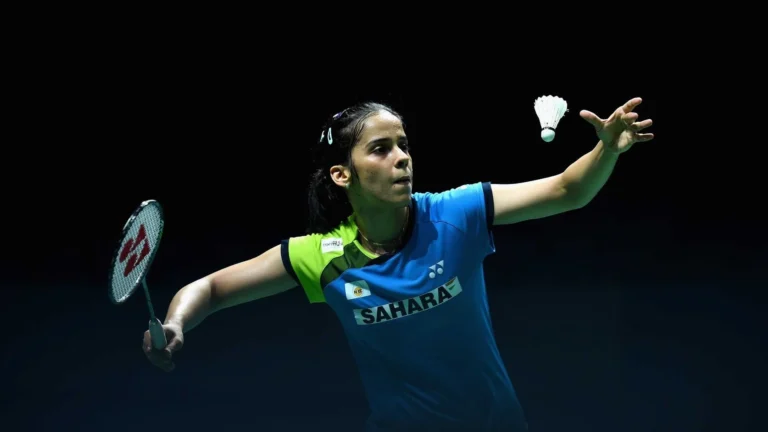




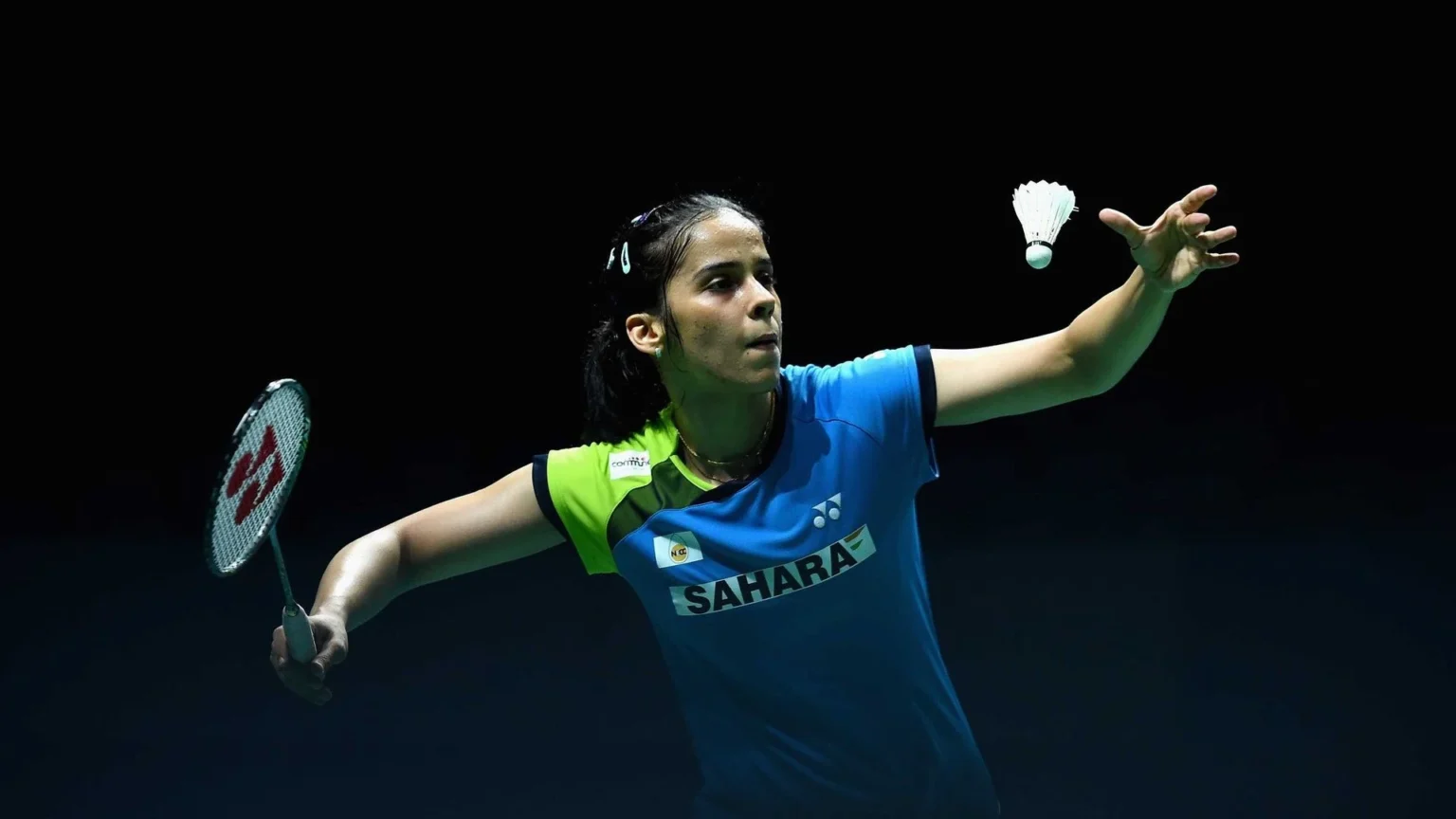
When Saina Nehwal first stepped onto the international stage in the mid-2000s, Indian badminton was a sport of “flashes in the pan.” We had legends like Prakash Padukone and Pullela Gopichand, but we lacked a consistent, week-in-week-out presence in the world’s top five. Saina didn’t just join the elite; she kicked the door down.
On Tuesday, during a podcast with fellow Olympian Gagan Narang, Saina finally spoke the words many feared but all understood: “I can’t push it anymore.”
1. The Biological Toll: Understanding “Chronic Degeneration”
The reason for her retirement isn’t a lack of hunger or a loss of skill—it is a total biological breakdown of her knees. Saina revealed that she has been diagnosed with severe cartilage degeneration and arthritis.
The Training Grind vs. Reality
For a professional shuttler to be World No. 1, they must train for 8 to 9 hours a day. The sport of badminton is arguably the most physically taxing on the joints due to the constant lunging, jumping, and rapid-fire changes in direction.
- The Symptoms: Saina explained that her knee now begins to swell and throb after just one hour of light training.
- The Decision: “If you are not capable of playing anymore, that’s it. It’s fine,” she noted with a sense of peaceful finality. She chose to leave on her own terms, without the need for a flashy farewell tournament that her body simply couldn’t sustain.
2. The 2012 London Breakthrough: A Tectonic Shift
The year 2012 remains the most significant milestone in Indian badminton history. Before Saina’s bronze medal at the London Olympics, no Indian shuttler had ever stood on an Olympic podium.
The “Lucky” Bronze?
Critics often point out that Saina won her bronze after her opponent, Wang Xin, retired due to an injury. But what the history books often forget is Saina’s relentless journey to that semi-final. She had to overcome a severe viral fever just weeks before the games and defeated the formidable Tine Baun in a grueling quarter-final. Her bronze wasn’t a stroke of luck; it was a reward for being the “last woman standing” in a high-attrition sport.
3. Breaking the Chinese Hegemony
During Saina’s peak (2009–2015), women’s badminton was a fortress guarded by the “Big Three” of China: Wang Yihan, Wang Shixian, and Li Xuerui.
Saina was the first non-Chinese player to consistently beat them. She earned the nickname “The Great Wall against China” because of her baseline grit. She wouldn’t just outplay her opponents; she would outlast them. Her victory at the 2014 China Open—becoming the first Indian woman to win on Chinese soil—remains one of the most gutsy performances in sports history.
4. The World No. 1 Moment (2015)
In April 2015, the BWF rankings confirmed what India already knew: Saina Nehwal was the best player on the planet.
- Historical Context: She was only the second Indian ever (after Prakash Padukone) and the first Indian woman to reach the pinnacle.
- The Impact: This ranking shattered the myth that Indian athletes couldn’t compete with the physical powerhouses of East Asia and Europe. It proved that with the right coaching (under Pullela Gopichand and later Vimal Kumar) and an obsessive work ethic, an Indian girl from Hisar could rule the world.
5. The “Saina Effect”: Inspiring a Generation
Saina Nehwal is to Indian badminton what Sachin Tendulkar was to Indian cricket. She made the sport “cool” and, more importantly, “viable.”
The Pipeline She Created:
- PV Sindhu: While Sindhu went on to win two Olympic medals, she has often credited Saina for clearing the path. Saina provided the blueprint for how to handle international pressure.
- Economic Boom: Because of Saina’s success, sponsorships flooded into the sport. The Premier Badminton League (PBL) and the proliferation of high-end academies across Hyderabad and Bengaluru are a direct result of the “Saina Effect.”
- Women in Sports: She became a symbol of fierce independence, proving that women could be the primary earners and the biggest stars in the Indian sporting landscape.
6. Career Statistics and Accolades
Saina leaves the court with one of the most decorated resumes in the history of the BWF.
| Milestone | Achievement | Year(s) |
| Olympic Medal | Bronze (London) | 2012 |
| World Ranking | World No. 1 | 2015 |
| Commonwealth Games | 2 Gold Medals (Singles) | 2010, 2018 |
| BWF World Championships | Silver & Bronze | 2015, 2017 |
| Super Series Titles | 10+ Titles | Indonesia, China, Australia, etc. |
| National Awards | Padma Bhushan, Khel Ratna, Arjuna | 2009–2016 |
7. Resilience Personified: The 2018 Comeback
Perhaps Saina’s greatest performance wasn’t her Olympic win, but her 2018 Commonwealth Games Gold.
After a devastating knee injury at the 2016 Rio Olympics that required surgery, many wrote her off. She was “too old” and “too slow.” In the 2018 final, she faced her younger, faster compatriot, PV Sindhu. In a tactical masterclass, Saina used her experience and sheer willpower to defeat Sindhu in straight games. It was a reminder that while her body was aging, her “Champion’s Heart” was as strong as ever.
8. Life After the Racket: What’s Next for Saina?
Saina has always been more than just an athlete. In her recent interviews, she has hinted at several paths:
- Mentorship: She remains passionate about helping the next generation of shuttlers navigate the mental rigors of the pro tour.
- Philanthropy: Ranked as one of the most charitable athletes, she continues to work with the Saina Nehwal Institute in Haryana.
- Parenting Advocacy: Interestingly, her recent interviews have focused on the importance of “strict parenting” and discipline, sparking a nationwide conversation on how to raise the next generation of champions.
Conclusion: A Legacy That Will Never Be Retired
Saina Nehwal’s retirement in January 2026 is a bittersweet moment. We will miss the trademark grunt, the aggressive fist pumps, and the sight of her standing defiant against the best in the world.
However, her legacy is secure. Every time an Indian kid picks up a Yonex racket, every time an Indian woman reaches a podium, and every time the national anthem plays at a badminton arena, Saina Nehwal is there. She didn’t just play the game; she changed the country.
Thank you, Saina. For the sweat, the bronze, and the belief.
Final Career Summary Checklist
- The Reason: Total cartilage degeneration and arthritis in the knees.
- The Milestone: First Indian to win an Olympic badminton medal (2012).
- The Peak: World No. 1 ranking achieved in 2015.
- The Farewell: Confirmed on January 20, 2026, on the House of Glory podcast.
- The Legacy: Credited with the professionalization and mass popularity of badminton in India.