

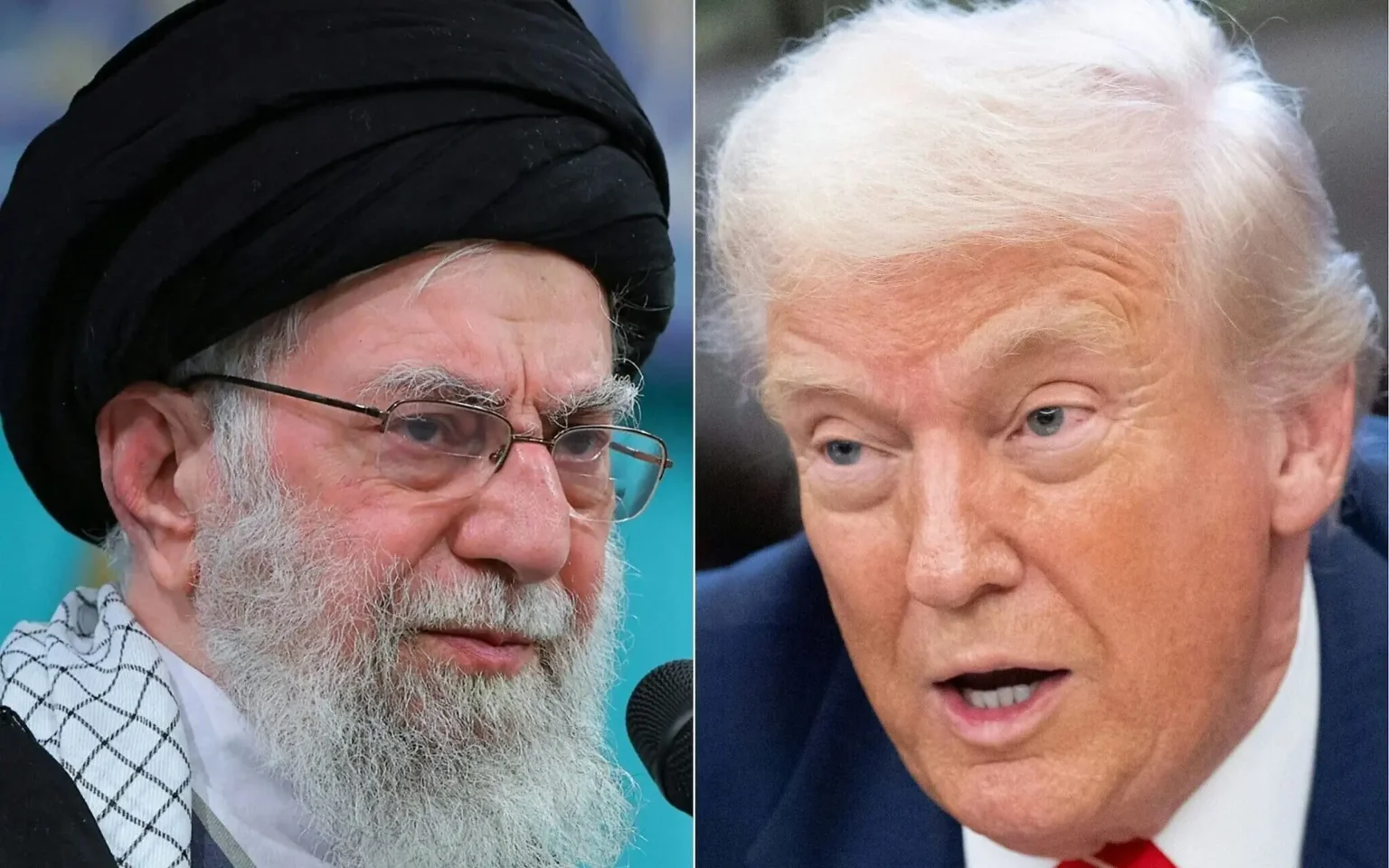
For decades, the idea of a sitting US President sitting across the table from Iran’s Supreme Leader was considered a geopolitical impossibility. However, in the “Phase Two” era of the Trump administration, the “impossible” is frequently on the table.
1. The Current Status: Is the Meeting “Fixed”?
As of today, a meeting between Donald Trump and Ali Khamenei is not officially “fixed.” However, the door has been swung open wider than ever before.
- The Rubio Signal: On February 14, 2026, US Secretary of State Marco Rubio stated that President Trump is “open to meeting” Khamenei. Rubio emphasized that Trump does not view meeting adversaries as a concession, but rather as a practical way to solve global problems.
- The Iranian Readiness: Following the first round of indirect talks in Muscat earlier this month, Iranian diplomats have signaled a readiness for “compromises” to secure economic benefits.
- The Geneva Pivot: A second round of high-level negotiations is scheduled to begin tomorrow, February 17, in Geneva. While these are currently indirect talks mediated by Oman and Switzerland, they are widely viewed as the “pre-game” for a potential leader-to-leader summit.
2. The Trump Strategy: “Traumatic Consequences” vs. A Great Deal
President Trump’s approach to 2026 diplomacy remains a masterclass in the “carrot and stick” method.
- The Stick: Trump recently warned Tehran of “very traumatic” consequences if a deal isn’t reached soon. To back this up, he has deployed a massive military buildup, including the USS Gerald R. Ford and the USS Abraham Lincoln aircraft carriers, currently stationed near the coast of Iran.
- The Carrot: Trump has repeatedly stated his “preference” is to reach a deal. He wants a “good deal” that ensures “no nuclear weapons and no missiles.”
- The Fort Bragg Comment: Just days ago, at Fort Bragg, Trump remarked that while a deal is the goal, he also believes a “regime change” might be the best thing that could happen—a comment that sent shockwaves through Tehran and added a layer of extreme pressure to the upcoming Geneva talks.
3. The Khamenei Factor: A 37-Year Tradition Broken
Perhaps the most significant signal comes from within Tehran itself. For the first time in 37 years, Ayatollah Khamenei skipped his annual February 8 meeting with air force generals.
- Why it Matters: This ritual has been a staple of the Islamic Republic since 1989. His absence is being interpreted in two ways: either he is in seclusion for safety during the US military buildup, or he is deeply immersed in the internal debate over whether to authorize direct talks with Trump.
- The “Midnight Hammer” Memory: Trump has been quick to remind Iran of the “Midnight Hammer”—the US-Israeli strikes on Iranian nuclear facilities last year. This historical context is driving Khamenei’s advisors to suggest that a deal might be the only way to ensure the regime’s survival.
4. Red Lines: Where the Negotiations Could Stall
Even if a meeting is arranged, the “Nuclear Deal 2.0” faces massive hurdles. The “Red Lines” are currently drawn in permanent marker:
| Feature | US/Israeli Position | Iranian Position |
| Uranium Enrichment | Demand for Zero Enrichment; dismantling of all infrastructure. | Insists on the right to civilian enrichment; Non-negotiable red line. |
| Ballistic Missiles | Must be included in the deal; limits on range and capability. | “Missile capabilities are a red line and not subject to negotiation.” |
| Regional Proxies | Demand to end support for Hamas, Hezbollah, and Houthis. | Views regional influence as a vital “defensive depth.” |
| Sanctions Relief | Only after verifiable dismantling of the nuclear program. | Demand for immediate access to frozen assets and oil exports. |
5. The Netanyahu Intervention
Israeli Prime Minister Benjamin Netanyahu remains the most influential “third party” in this dialogue. Following his meeting with Trump on February 11, Netanyahu has set his own “maximalist” red lines:
- No Enrichment on Iranian Soil: Netanyahu is pressing Trump to ensure that all enriched material leaves Iran and that the infrastructure to enrich is dismantled entirely.
- Skepticism: Netanyahu publicly expressed “general skepticism” regarding the quality of any agreement, fearing a “narrow deal” that ignores Iran’s missile program.
6. The Geneva Summit: What to Expect Tomorrow
The Geneva talks on February 17 are the litmus test. US envoys Steve Witkoff and Jared Kushner are expected to lead the American side.
- The Economic Barter: Iran’s deputy foreign minister has suggested an expanded barter scheme—oil for basic goods—as a way to provide immediate relief to the Iranian people, who are currently suffering under a tightening sanctions regime.
- The Inspection Concession: In a major potential breakthrough, the Iranian President recently hinted that the country might be willing to open its nuclear sites for IAEA inspections to verify they are not building a weapon.
Conclusion: A High-Stakes Gamble
So, is the meeting fixed? Not yet. But the momentum is undeniably building.
Donald Trump sees a “Big Deal” with Iran as the ultimate feather in his foreign policy cap—the missing piece of the “Peace in the Middle East” puzzle he began with the Abraham Accords. For Ayatollah Khamenei, a meeting with Trump represents the ultimate risk: a chance to save the economy and the regime, but at the cost of the very anti-American ideology the Islamic Republic was founded upon.
As both sides converge on Geneva this week, the world watches. If a breakthrough occurs in the coming days, we may see the most historic handshake of the 21st century before the month is out.