





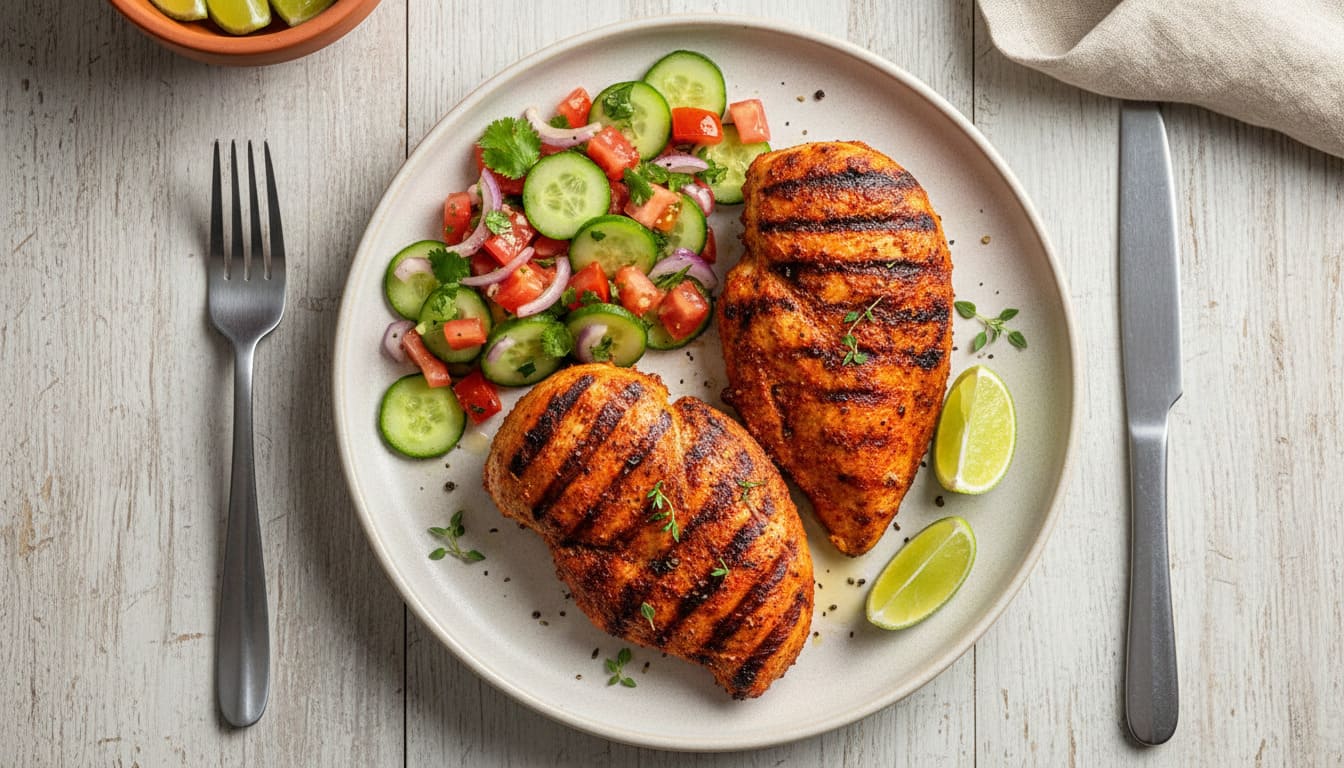
The secret to a low-oil main course isn’t just removing the oil; it’s replacing it with acid and moisture.
The Role of the Tandoor (and its modern substitutes)
The traditional Tandoor is a clay oven that reaches temperatures upwards of 480°C. This intense heat sears the meat instantly, locking in the juices while rendering out any natural fat.
In a home kitchen in 2026, we replicate this using Air Fryers, Convection Ovens, or Infrared Grills. The goal is high-velocity hot air. When you use this technology, you don’t need a pool of oil to create a “crust.” The spices and the protein itself create a delicious, charred exterior through the Maillard Reaction—the chemical reaction between amino acids and reducing sugars that gives browned food its distinctive flavor.
The Magic of Yogurt Marination
In Tandoori cooking, yogurt is your best friend. It serves three purposes:
- Tenderizer: The lactic acid in yogurt gently breaks down the protein fibers of the chicken.
- Fat Substitute: It provides a creamy mouthfeel without the calories of heavy oil.
- Protective Shield: It creates a coating that prevents the meat from drying out under high heat.
Part 1: The Ultimate Healthy Tandoori Chicken
Most restaurant Tandoori chicken is dyed with artificial red coloring and basted in clarified butter (Ghee). Our version uses Beetroot powder or Kashmiri Mirch for color and zero-fat Greek yogurt for the base.
The Ingredient List
- The Protein: 500g Chicken Thighs (boneless or bone-in, skin removed). Thighs stay moister than breasts in high-heat environments.
- The Base: 1 cup Thick Greek Yogurt (strained).
- The Aromatics: 2 tbsp Ginger-Garlic paste (fresh is non-negotiable).
- The Spices: 1 tsp Cumin powder, 1 tsp Coriander powder, 1/2 tsp Turmeric, 1 tsp Garam Masala, and 2 tsp Kashmiri Red Chili powder.
- The Secret Touch: 1 tsp Kasoori Methi (dried fenugreek leaves) crushed between your palms.
The Step-by-Step Method
1. The “First” Marination
Don’t skip this. Rub the chicken with lemon juice, salt, and a bit of chili powder. Let it sit for 20 minutes. This ensures the seasoning penetrates the bone and begins the tenderization process.
2. The Yogurt Coat
Whisk the yogurt with the remaining spices and ginger-garlic paste. Coat the chicken thoroughly. If you have time, let this sit for 4–6 hours (or overnight). The longer it sits, the less oil you need later because the meat will be naturally tender.
3. The High-Heat Blast
- Air Fryer: 200°C for 15–18 minutes, turning halfway through.
- Oven: Use the “Broil” or “Grill” setting. Place the chicken on a wire rack over a baking tray. This allows the hot air to circulate under the meat, preventing it from getting soggy.
4. The “No-Oil” Char
In the last 2 minutes, increase the heat. You want those blackened “char” spots. That is where the smoky, tandoori flavor lives.
Part 2: Zesty Lemon-Garlic Grilled Fish
Fish is the king of low-oil cooking because it contains its own healthy fats (Omega-3s). However, fish is delicate. If you don’t use oil, it can stick to the grill or pan. Here is how we solve that.
Choosing Your Fish
- Firm White Fish: Pomfret, Sea Bass, or Tilapia are excellent for Mediterranean-style grilling.
- Oily Fish: Salmon or Mackerel are great because they are virtually “self-lubricating”—you need almost zero added oil.
The “Parchment” Hack
If you are worried about the fish sticking to the grill without oil, use a Silicone mat or a thin piece of parchment paper with holes poked through it. This allows the heat and smoke to reach the fish while providing a non-stick barrier.
The Mediterranean Marinade
- Acid: Juice of 2 Lemons.
- Herbs: Fresh Parsley and Dill (finely chopped).
- Spice: Crushed Black Pepper and a pinch of Sea Salt.
- Garlic: 4 cloves, minced into a paste.
- Oil Substitute: 1 tbsp of Dijon Mustard. The mustard acts as an emulsifier and creates a crust that mimics a deep-fried texture.
The Grilling Process
- Pat the fish completely dry with a paper towel. Moisture is the enemy of a good sear.
- Apply the marinade just 15 minutes before cooking. Unlike chicken, fish is fragile; if it sits in lemon juice too long, it will “cook” in the acid and become mushy.
- Grill over medium-high heat. Rule of Thumb: 4 minutes per side for every inch of thickness.
- Don’t Touch It! Let the fish develop a crust before you try to flip it. If it’s sticking, it’s not ready to turn.
Nutritional Comparison: Traditional vs. Healthy Method
| Feature | Restaurant Tandoori/Fish | Our “Healthy” Method |
| Cooking Medium | Deep-fried or Butter-basted. | Air-fried / Convection. |
| Fat Content | 25g – 40g per serving. | 5g – 8g per serving. |
| Coloring | Artificial Red Dye No. 40. | Beetroot / Kashmiri Chili. |
| Sodium | High (processed marinades). | Controlled (Fresh spices). |
The Perfect Sides: Keeping it Low-Carb and High-Fiber
A main course is only as healthy as its companions. Skip the heavy Naan and buttered rice. In 2026, we’re all about nutrient-dense pairings.
1. Mint and Yogurt Chutney
Blend fresh mint, coriander, green chilies, and a splash of lemon into half a cup of zero-fat yogurt. It’s the essential cooling component for spicy Tandoori chicken.
2. Cauliflower “Pilaf”
Pulse cauliflower in a food processor until it looks like grain. Sauté it with cumin seeds and peas in a non-stick pan with a spray of olive oil. It absorbs the juices of the grilled fish beautifully.
3. Kachumber Salad
A refreshing mix of diced cucumbers, tomatoes, onions, and radishes with a heavy squeeze of lime. The crunch provides the perfect texture contrast to the soft, grilled meat.
Tips for Longevity: How to Meal Prep These Mains
One of the best things about Tandoori Chicken and Grilled Fish is that they are meal-prep friendly.
- Freeze the Marinade: You can freeze chicken in the Tandoori marinade. As it thaws in your fridge during the workday, it undergoes a “deep marination,” making it incredibly flavorful by dinner time.
- The Salad Jar: Prep your Kachumber salad ingredients but keep the dressing (lime/salt) separate until the moment you eat to prevent wilting.
- Reheating: Never use the microwave for grilled fish; it will turn into rubber. Use an air fryer for 3 minutes at 160°C to bring back the “crunch” without drying it out.
Common Pitfalls to Avoid
Mistake #1: Using Cold Meat. Always bring your chicken or fish to room temperature (about 20 minutes on the counter) before cooking. Cold meat hits a hot pan and “seizes,” leading to a tough, unevenly cooked dinner.
Mistake #2: Overcrowding the Pan. If you put too many pieces of chicken in the air fryer, they will steam instead of grill. You’ll end up with gray, soggy meat instead of that beautiful Tandoori red. Cook in batches if necessary.
Mistake #3: Ignoring the Rest. Just like a steak, chicken and fish need to “rest” for 5 minutes after they come off the heat. This allows the juices to redistribute. If you cut into it immediately, all that moisture will end up on your plate instead of in your mouth.
Conclusion: Reclaiming the Dinner Table
Healthy eating in 2026 isn’t about restriction; it’s about flavor engineering. By using the power of yogurt, the intensity of convection heat, and the vibrant palette of traditional spices, you can create a Tandoori Chicken or Grilled Fish dinner that rivals any restaurant—without the heavy “oil hangover.”
These recipes aren’t just for “diet days.” They are for anyone who loves bold, smoky flavors and wants to feel energized, not sluggish, after a meal.