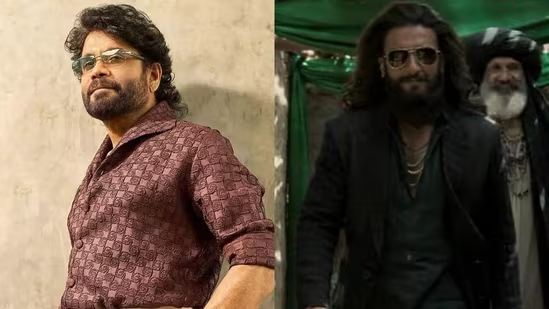






In an era where opinions spread faster than facts and films are often judged even before their full impact is felt, veteran actress Jaya Prada has stepped forward with a strong and thoughtful message. Addressing the growing criticism surrounding Dhurandhar 2, she urged audiences and critics alike to experience the film before forming conclusions.
Her statement—“It’s easy to say bad things”—has sparked conversations across the industry and among audiences, highlighting an important issue in today’s entertainment culture: the tendency to judge quickly, often without context.
This is not just a defense of a film; it’s a broader commentary on fairness, perspective, and the evolving relationship between cinema and its audience.
The Context Behind the Criticism
Dhurandhar 2 has been one of the most talked-about films in recent times, generating both excitement and skepticism.
With high expectations often comes intense scrutiny. Early reactions, social media chatter, and speculative reviews have created a mixed narrative around the film—even before many viewers have had a chance to watch it themselves.
This is where Jaya Prada’s statement becomes particularly relevant.
She pointed out that criticism, while important, should be informed and fair. Jumping to conclusions without experiencing the complete work not only undermines the effort behind the film but also deprives audiences of forming their own opinions.
“It’s Easy to Say Bad Things”
Jaya Prada’s words reflect a deeper truth about modern discourse.
In today’s digital age:
- Opinions are shared instantly
- Negative commentary often gains more attention
- Nuanced discussions are sometimes overlooked
Her statement highlights how easy it has become to criticize, especially when there is little accountability.
But behind every film lies:
- Years of hard work
- Creative vision
- Emotional investment from the entire team
Reducing all of that to quick judgments can be unfair—not just to the creators, but also to audiences seeking meaningful experiences.
A Call for Open-Minded Viewing
Rather than dismissing criticism entirely, Jaya Prada advocates for a more balanced approach.
Her message is simple: watch the film first.
This approach encourages:
- Independent thinking
- A fair evaluation of the story
- A deeper appreciation of the craft
By urging people to experience Dhurandhar 2 before judging it, she is promoting a culture of informed opinions.
The Changing Nature of Film Criticism
Film criticism has always been a part of cinema. It helps audiences understand different perspectives and encourages filmmakers to evolve.
However, the nature of criticism has changed significantly.
Today:
- Social media amplifies every opinion
- Early reactions can shape public perception
- Films are sometimes judged based on trailers or rumors
This shift has made it more challenging for films to be evaluated on their own merit.
Jaya Prada’s statement serves as a reminder that true criticism should come from engagement, not assumptions.
The Responsibility of the Audience
While filmmakers and actors create content, audiences play an equally important role in shaping its success and legacy.
With that role comes responsibility.
Viewers are encouraged to:
- Watch films with an open mind
- Form their own opinions
- Engage in constructive discussions
By doing so, they contribute to a healthier cinematic environment.
The Emotional Investment Behind Films
Every film represents a collective effort.
From actors and directors to technicians and writers, countless individuals work tirelessly to bring a story to life.
For a project like Dhurandhar 2, this effort is likely even more significant, given the expectations associated with it.
Jaya Prada’s defense can be seen as a recognition of this effort.
Her words remind us that behind every frame lies dedication, passion, and creativity.
Standing Up for the Industry
As a veteran who has witnessed the evolution of Indian cinema, Jaya Prada brings a unique perspective.
Her support for Dhurandhar 2 is not just about one film—it’s about standing up for the industry as a whole.
By addressing the issue of premature criticism, she is advocating for:
- Respect for creative work
- Fair opportunities for films to be evaluated
- A more thoughtful audience culture
Encouraging Dialogue, Not Division
One of the key takeaways from her statement is the importance of dialogue.
Criticism should not lead to division or negativity. Instead, it should:
- Spark meaningful conversations
- Offer constructive feedback
- Enhance the viewing experience
By encouraging people to watch the film first, Jaya Prada is promoting dialogue over assumptions.
The Impact of Celebrity Voices
When respected figures like Jaya Prada speak out, their words carry influence.
Her message has:
- Drawn attention to the issue of premature criticism
- Encouraged audiences to rethink their approach
- Added a new dimension to the conversation around Dhurandhar 2
This highlights the role of public figures in shaping not just entertainment, but also public discourse.
What This Means for Dhurandhar 2
The film now finds itself at the center of a larger conversation.
Beyond its storyline or performances, it represents:
- The challenges of modern filmmaking
- The impact of audience perception
- The importance of fair evaluation
Jaya Prada’s support adds a layer of credibility and encourages viewers to give the film a chance.
Conclusion
Jaya Prada’s response to the criticism surrounding Dhurandhar 2 is both timely and thought-provoking.
Her statement—“It’s easy to say bad things”—serves as a reminder that opinions should be grounded in experience, not assumptions.
In a world where quick judgments often dominate, her message encourages patience, openness, and fairness.
Ultimately, her call is simple yet powerful: watch the film, understand it, and then decide.
Because cinema, at its core, is meant to be experienced—not pre-judged.