




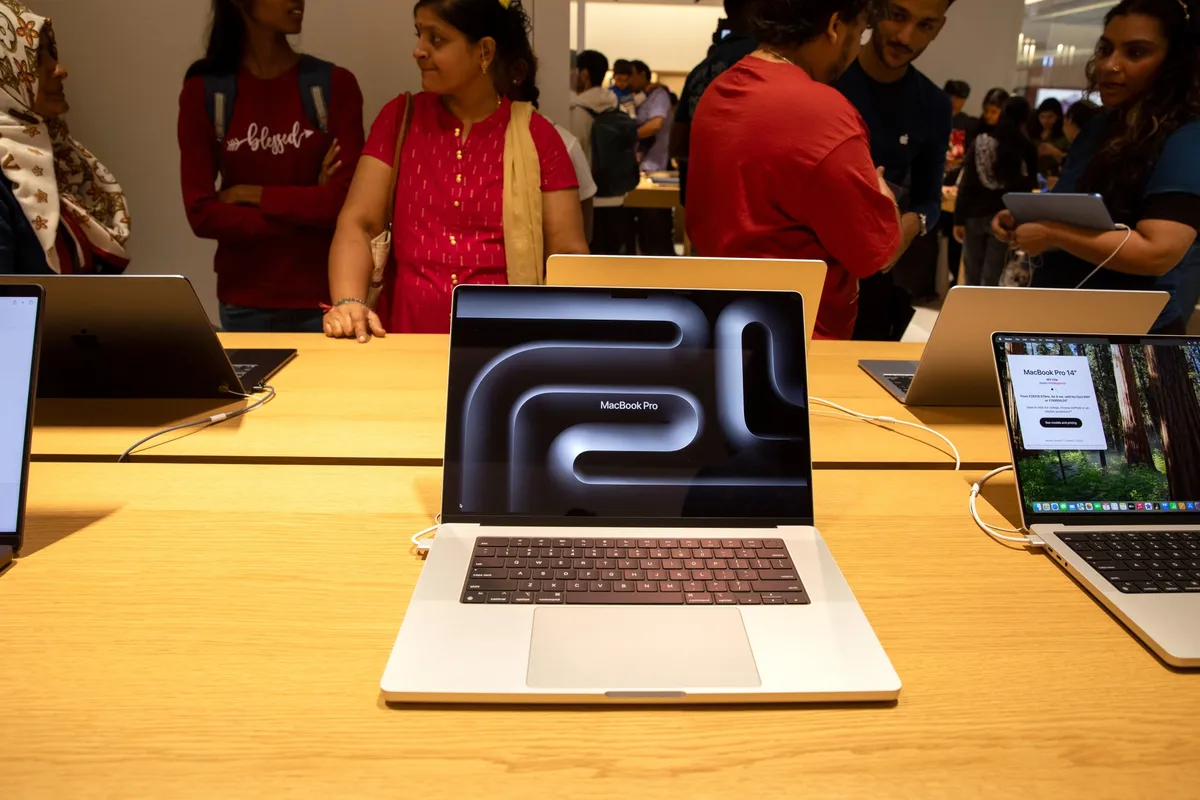
Rumors surrounding upcoming MacBook upgrades are gaining momentum, with multiple reports suggesting that Apple is preparing a major redesign of its premium laptops. The biggest change under discussion is the possible introduction of OLED displays and touchscreen functionality — a move that would mark one of the most significant shifts in the MacBook lineup in years.
Below is a detailed breakdown of what’s being rumored, when these devices could launch, and why this transition could reshape the future of Apple laptops.
A historic shift: Touchscreen support may finally arrive
For decades, Apple resisted touchscreen laptops, arguing that vertical touchscreens were ergonomically impractical and that touch belonged on the iPad. However, reports now suggest the company is preparing its first MacBook Pro models with touch-enabled displays.
The rumored implementation won’t turn the Mac into a tablet replacement. Instead, macOS will support touch gestures while maintaining traditional keyboard and trackpad interaction.
Expected touch features include:
- Pinch-to-zoom and swipe gestures
- Tap-friendly controls and menus
- Dynamic UI adjustments based on input method
- Touch-optimized contextual menus
The interface may adapt automatically, enlarging controls when using touch and switching back to cursor precision when using a trackpad or mouse.
OLED displays: a major visual upgrade
Another key upgrade is the transition from mini-LED panels to OLED screens. Reports indicate Apple may introduce OLED panels in both 14-inch and 16-inch MacBook Pro models.
OLED technology brings several advantages:
✔ Deeper blacks and higher contrast
✔ Improved color accuracy for creators
✔ Better power efficiency
✔ Thinner display panels
This upgrade would be particularly beneficial for photographers, video editors, and designers who rely on accurate color reproduction.
Dynamic Island may come to Mac
Some leaks suggest Apple could bring a version of the “Dynamic Island” interface — first seen on iPhones — to MacBook displays.
On a Mac, this feature could:
- Display notifications and alerts
- Show background tasks (downloads, recording, timers)
- Provide interactive controls for apps
This change may also replace the current notch with a smaller camera cutout design.
New macOS interface designed for touch
To support touch input, Apple is reportedly redesigning elements of macOS.
Possible enhancements include:
- Larger tap targets for finger interaction
- Pop-up menus near touch points
- Gesture-friendly navigation
- Context-aware interface changes
The system may intelligently detect whether you’re using touch, trackpad, or mouse and adjust accordingly.
Powered by next-generation Apple Silicon
The touchscreen OLED MacBooks are expected to debut alongside next-generation Apple Silicon chips.
Reports suggest:
- Spring 2026 refresh may bring M5 Pro & Max chips
- OLED touchscreen models may launch with M6 chips later in 2026
- New chips could be built on advanced 2-nm technology for improved performance and efficiency
This suggests Apple is aligning the design overhaul with a significant performance leap.
Design changes and build refinements
While Apple may maintain the familiar MacBook Pro look, leaks indicate several refinements:
Possible changes include:
- Slimmer chassis
- Lighter design
- OLED panel enabling thinner lid construction
- Improved thermals thanks to efficient chips
Despite the addition of touch functionality, Apple is expected to retain the keyboard and trackpad as primary input tools.
Face ID still uncertain
Some reports speculate about Face ID integration, but it may not arrive in the first touchscreen MacBook generation.
Touch ID is expected to remain the primary biometric authentication method for now.
Expected launch timeline
Current reports point to a phased rollout:
Early–mid 2026
- Performance refresh with new Apple Silicon
Late 2026 (likely)
- OLED touchscreen MacBook Pro launch
Some rumors suggest the redesign may arrive toward the end of the year rather than during Apple’s March announcements.
Why Apple is embracing touch now
Several factors may be pushing Apple toward touch-enabled Macs:
1. Changing user expectations
Most Windows laptops now include touchscreens, and many users instinctively tap Mac displays expecting them to respond.
2. Convergence of platforms
macOS and iPadOS have grown closer in functionality, making hybrid input methods more practical.
3. Apple Silicon efficiency
Modern chips allow thinner designs and better battery life, enabling hardware changes without sacrificing performance.
4. Professional workflows
Touch input can improve workflows in creative, design, and productivity applications.
Will touch Macs replace iPads?
Apple is unlikely to merge the Mac and iPad product lines.
Instead:
- iPads remain touch-first devices
- MacBooks remain productivity laptops with hybrid input support
- Both platforms serve different use cases
This strategy allows Apple to expand usability without cannibalizing its own products.
Expected pricing
While pricing remains unconfirmed, OLED panels and redesign costs suggest premium pricing.
Industry expectations:
- OLED models may debut in the higher-end MacBook Pro range
- Base variants may retain traditional displays to maintain affordability
- Price increases could accompany the OLED transition
What this means for buyers
If the rumors prove accurate, the upcoming MacBook Pro redesign could be the biggest shift in Apple laptop design in over a decade.
Reasons to wait:
✔ OLED display upgrade
✔ Touchscreen support
✔ Next-gen Apple Silicon performance
✔ New macOS interaction model
Reasons to buy current models:
✔ Proven reliability
✔ Likely lower pricing
✔ Touch input may not be essential for all users
Final thoughts
The rumored OLED touchscreen MacBook Pro represents a significant evolution for Apple’s laptop lineup. By combining touch input, a redesigned interface, and advanced display technology, Apple appears ready to modernize the Mac experience while preserving its productivity-first identity.
If launched as expected in late 2026, these upgrades could redefine how users interact with macOS — blending traditional computing with intuitive touch controls for the first time.