





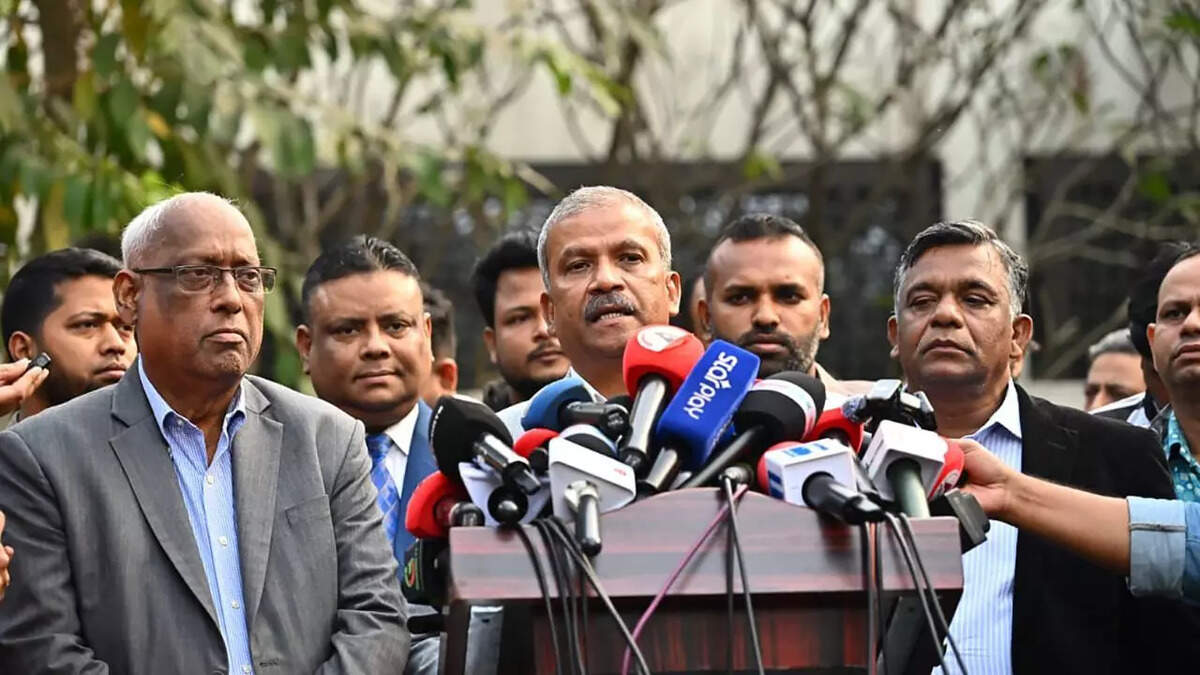
Bangladesh has taken a firm stand against playing its 2026 ICC Men’s T20 World Cup matches in India, citing security and safety concerns for its players and officials — a position that has put its participation in the tournament in serious jeopardy.
The Bangladesh Cricket Board (BCB), backed by comments from government sports advisers, announced that it will not send the national team to India unless the scheduled matches are relocated to a neutral venue such as Sri Lanka. But the International Cricket Council (ICC) has rejected that request, leaving Bangladesh with a stark choice: travel to India as scheduled or risk being replaced in the tournament entirely.
What Triggered the Dispute
Tensions escalated after the removal of Bangladesh fast bowler Mustafizur Rahman from his Indian Premier League (IPL) contract, which the BCB saw as a security-related slight connected to broader political friction between Bangladesh and India. That incident has been cited by the board and government officials as part of the reason they believe playing in India could put the team at risk.
ICC Rejects Venue Change — Cites Security Assessments
The ICC has maintained that independent threat assessments show no credible security risk to the Bangladesh team or fans at match venues in India. The governing body also emphasizes that altering tournament venues so close to the event disrupts overall planning and sets a difficult precedent for future ICC events.
After an ICC board meeting, officials gave Bangladesh a deadline to confirm its willingness to play in India — with assurances that failure to do so could mean replacement by another qualified team (likely Scotland).
Bangladesh’s Reaction and Government Backing
Bangladesh’s sports and cricket authorities have described the ICC’s refusal as unfair and dismissive of genuine concerns, insisting that security guarantees and diplomatic engagement from India were insufficient. Officials argue that previous ICC decisions — such as allowing India to shift its 2025 Champions Trophy matches to a neutral venue — show inconsistency in applying security reasoning across different teams.
In response to the impasse, Bangladesh’s interim government and BCB reaffirmed that player safety is non-negotiable and indicated they would not back down from their stance.
Potential Exclusion and Broader Implications
With the deadline now passed and Bangladesh yet to formally communicate acceptance of India as host venues, it’s increasingly likely that Bangladesh could be excluded from the competition and replaced by another team — a significant blow for a full member nation in one of cricket’s premier global tournaments.
This dispute also highlights a growing intersection of cricket, diplomacy, and security — raising questions about how international sporting bodies balance logistical commitments with the safety concerns of member nations.
What Happens Next
- Bangladesh could still engage in last-minute talks with the ICC or the Indian government to secure clearer security assurances.
- The ICC appears poised to proceed with the tournament schedule unless Bangladesh reverses its stance.
- Replacement by another qualified team (such as Scotland) is increasingly plausible if no agreement is reached.
Bottom Line
What began as a disagreement over venue and safety has escalated into one of the most serious pre-tournament crises the T20 World Cup has faced — with Bangladesh’s participation hanging in the balance and wider cricket governance issues very much in the spotlight.