



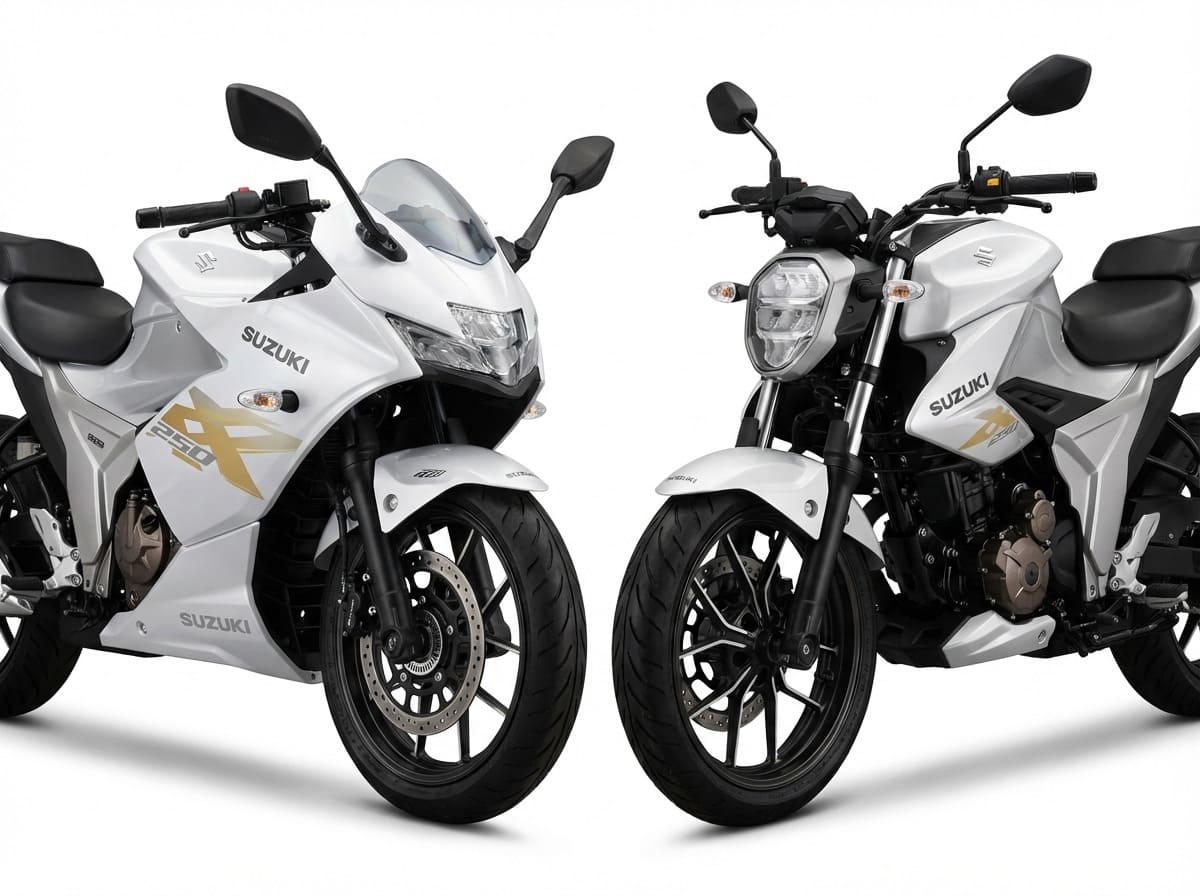
In the Indian motorcycling lexicon, the Suzuki Gixxer nameplate has always stood for a very specific set of values: handling precision, bulletproof reliability, and an understated, almost mature approach to performance. Unlike the frantic energy of a KTM or the raw muscle of a Dominar, the Gixxer 250 twins (the naked streetfighter and the faired SF sports tourer) have carved out a niche as the “thinking rider’s 250s.”
Now, in early 2026, Suzuki Motorcycle India has announced a comprehensive update for both models. However, enthusiasts scanning the spec sheet for a bump in horsepower or the addition of a quickshifter will be disappointed. This is a purely cosmetic intervention. But to dismiss it as “just stickers” would be a mistake. In a market where visual freshness often dictates showroom footfall, Suzuki’s decision to introduce sophisticated new paint schemes while holding the price line is a calculated strategic move.
This analysis explores the 2026 updates, the “Glass Sparkle” aesthetic philosophy, and why the Gixxer 250 platform remains a formidable contender despite the lack of mechanical changes.
1. The 2026 Palette: A Shift to “Mature Aggression”
The headline of the 2026 update is the introduction of a new color palette that seems designed to push the Gixxer twins upmarket. Suzuki has moved away from the loud, graphic-heavy designs of the past few years, opting instead for cleaner lines and deeper, metallic finishes. This aligns with the global trend of “stealth wealth” and mature sportiness.
For the Gixxer SF 250 (The Faired Sport Tourer)
The SF 250 has always been the looker of the family, with its clean, flowing fairing that traces its lineage back to the legendary GSX-R1000. For 2026, it gets two major visual updates:
- Glass Sparkle Black: This is not just a standard gloss black. It is a deep, wet-look finish that completely transforms the bike’s silhouette. By removing the busy contrasting decals and opting for subtle red accents, Suzuki has given the SF 250 a “stealth bomber” vibe. It highlights the muscularity of the tank and the sharpness of the fairing cuts without screaming for attention. In low light, the bike looks menacing; under direct sunlight, the metallic flakes in the “Glass Sparkle” paint pop, giving it a premium depth.
- Pearl Glacier White / Metallic Mat Platinum Silver No.2: This is the “hero” color for 2026. It is a sophisticated dual-tone scheme where the pearlescent white dominates the upper bodywork, while the matte silver hugs the lower fairing and belly pan. Tasteful gold graphics have been applied, which strikes a chord with the premium “big bike” aesthetic often seen on larger Italian and Japanese superbikes. This color combination makes the bike look physically larger and more expensive than it actually is.
Note: The iconic Metallic Triton Blue, Suzuki’s MotoGP signature, remains in the lineup for the purists who demand that race-replica look.
For the Gixxer 250 (The Naked Streetfighter)
The naked sibling, often lauded for its city-slicking agility, receives a slightly more aggressive treatment:
- Metallic Triton Blue / Glass Sparkle Black: A fresh remix of the classic corporate colors. Instead of being entirely blue, the tank shrouds and tail section now feature heavy black integration, making the bike look more compact and dense.
- Pearl Glacier White / Metallic Mat Platinum Silver No.2: Identical to the faired version, this brings a sense of class to the naked segment. It is a direct challenge to the white/orange schemes of KTM, offering a cleaner, more gentlemanly alternative.
- Glass Sparkle Black: The all-black treatment on the naked bike works exceptionally well to hide the visual bulk of the exhaust canister and engine distinctiveness, drawing the eye instead to the gold-finished engine case cover and the bright LED headlamp.
2. The Mechanical Stance: Why “If It Ain’t Broke…” Works
Critics will inevitably point out the lack of mechanical updates. The 2026 Gixxer twins continue to use the same 249cc, single-cylinder, oil-cooled engine.
The Specs Remain:
- Power: 26.5 PS @ 9300 rpm
- Torque: 22.2 Nm @ 7300 rpm
- Transmission: 6-speed gearbox
- Cooling: SOCS (Suzuki Oil Cooling System)
Why didn’t Suzuki upgrade the engine? The answer lies in the unique positioning of the SOCS engine. This was an engineering marvel when it launched, using a complex oil-jacket system around the combustion chamber to eliminate the need for a water radiator, fan, and coolant pump. This reduces weight (the SF 250 is a featherweight 161 kg) and mechanical complexity.
In 2026, this engine still holds its own. It is smoother than the KTM 250 Duke’s unit at low RPMs and more tractable in city traffic than the high-strung R15 V4. By not messing with the engine, Suzuki avoids the need for price hikes associated with re-homologation or adding complex new tech that might compromise reliability. The 26.5 PS figure sits in the “Goldilocks zone”—enough power to cruise at 120 km/h all day, but not so much that it kills fuel efficiency (which remains a solid 35-38 km/l).
3. Strategic Pricing: The “Effective” Price Cut
Here is the most critical business aspect of this launch: The Price Freeze.
Despite inflation and rising input costs over the last year, Suzuki has kept the ex-showroom prices virtually unchanged:
- Gixxer 250: ~ ₹1.81 Lakh
- Gixxer SF 250: ~ ₹1.89 Lakh
The “Real” Value Proposition Suzuki is sweetening the deal with consumer offers right out of the gate. Reports indicate insurance savings and extended warranty benefits worth up to ₹12,000. When you combine a stagnant sticker price with ₹12,000 in benefits, the effective on-road price for the consumer in 2026 is actually lower than it was in 2025.
This is a direct response to the “price creep” seen in competitors. The KTM 250 Duke has crossed the ₹2.40 Lakh mark. Even the 155cc Yamaha R15 V4, in its top-spec M variant, is perilously close to the Gixxer SF 250’s price. By holding the line, Suzuki is screaming value. They are offering a true quarter-liter experience for the price of a premium 150cc.
4. Market Context: The “Middleweight” Battleground of 2026
To understand the relevance of these new colors, we must look at what the Gixxer twins are fighting against in 2026.
The Competitor Landscape:
- KTM 250 Duke: The performance king. It’s faster, tech-heavy (quickshifter, Ride-by-Wire), but significantly more expensive and aggressive. The Gixxer is for the rider who finds the Duke “too much” for the daily commute.
- Bajaj Dominar 250: The heavy cruiser. It offers stability and presence but suffers from heavy weight (180kg+). The Gixxer SF 250 offers similar touring ability but is nearly 20kg lighter, making it far easier to manage in parking lots and traffic.
- Yamaha R15 V4: The arch-nemesis. Though smaller in engine size (155cc), its pricing overlaps with the Gixxer. The R15 wins on tech (Traction Control, Quickshifter) and pure cornering dynamics. However, the Gixxer 250 destroys it on torque and highway comfort. The R15 is a track tool; the Gixxer SF 250 is a road bike.
The “Mature” Niche Suzuki’s new colors—specifically the White/Silver and Sparkle Black—are clearly targeting the 25-35-year-old demographic. These are buyers who want a sportbike but don’t want to look like a “boy racer.” They want a bike that looks dignified in an office parking lot but can still carve corners on a Sunday morning. The Gixxer 250, with its refined aesthetic, fits this brief perfectly.
5. The Missing Pieces: What We Still Want
While the update is welcome, a balanced analysis must acknowledge the missed opportunities. In 2026, certain features are becoming standard hygiene factors, and their absence on the Gixxer is becoming conspicuous:
- Non-LED Indicators: It is baffling that a bike with such a premium design still comes with bulb turn indicators. It’s a small cost-cutting measure that sticks out like a sore thumb against the new premium paint.
- USD Forks: The telescopic forks are perfectly tuned and perform well, but the market perceives Upside Down (USD) forks as premium. With the Pulsar N250 and others adopting USDs, the Gixxer looks visually dated in the suspension department.
- Traction Control: While 26.5 PS doesn’t strictly need traction control, having it is a safety net that newer riders appreciate, especially given that rivals like the R15 and Ronin offer it.
6. The Ownership Experience: Suzuki’s Ace Card
One area where the Gixxer 250 continues to shine—and where the new colors add value—is longevity. The build quality of the Gixxer 250 has historically been superior to its domestic rivals. Panel gaps are tight, paint quality is deep (and the new “Glass Sparkle” finish promises to be even more durable), and the switchgear feels tactile.
For the touring enthusiast, the Gixxer SF 250 remains the best budget sports-tourer in India. The clip-on handlebars are raised just enough to prevent wrist pain, the fairing deflects wind effectively up to 130 km/h, and the engine is vibration-free at cruising speeds. The new “Pearl Glacier White” color scheme, which mimics the look of the mighty Hayabusa, adds a psychological layer of satisfaction to the ownership experience. You feel like you own a “big Suzuki.”
Conclusion: The Art of Staying Relevant
The 2026 update for the Suzuki Gixxer 250 and SF 250 is a masterclass in product lifecycle management. Suzuki knows they have a mechanically sound, well-engineered product that doesn’t need a heart transplant. Instead, they have given it a facelift that aligns it with modern, premium tastes.
By introducing the Pearl Glacier White / Matte Platinum Silver and Glass Sparkle Black, Suzuki has successfully refreshed the bike’s visual identity, making it look more expensive than it is. But the real masterstroke is the pricing strategy. By holding the price steady and adding ₹12,000 worth of benefits, they have aggressively positioned the Gixxer 250 twins as the “Value Champions” of the quarter-liter class.
For the rider who finds the KTM too frantic, the Dominar too heavy, and the R15 too cramped, the 2026 Gixxer 250 remains the perfect middle ground—now dressed in a suit that finally matches its gentlemanly performance.