




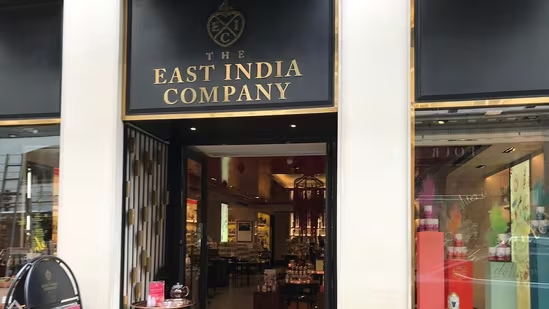
In a surprising turn of events, the modern reincarnation of the East India Company has reportedly filed for bankruptcy in England, marking the collapse of a controversial effort to revive one of the most historically significant commercial names in the world.
While the original East India Company ceased to exist in the 19th century, the brand name was revived in recent decades as a luxury goods and specialty food business. The bankruptcy filing signals the end of that modern commercial venture and closes a chapter that blended heritage branding with contemporary retail ambitions.
A Name That Shaped Global History
Founded in 1600 under a royal charter from Queen Elizabeth I, the East India Company evolved from a trading enterprise into one of the most powerful commercial organizations in history. It controlled trade routes, influenced geopolitics, and eventually administered large parts of the Indian subcontinent.
The company’s activities reshaped global commerce through trade in spices, textiles, tea, and other commodities. However, its legacy is deeply controversial due to its role in colonial expansion, economic exploitation, and political control in Asia.
Following the Indian Rebellion of 1857, governance of its territories was transferred to the British Crown, and the company was formally dissolved in 1874.
The Modern Revival: Heritage Meets Luxury Retail
In the early 21st century, entrepreneurs revived the East India Company name as a premium retail brand focused on luxury teas, gourmet foods, and lifestyle products inspired by historical trade routes.
The revived brand positioned itself as a heritage luxury label, offering:
- rare teas and spices
- artisanal chocolates and confectionery
- fine dining experiences
- premium hampers and gifts
- historical-themed retail stores
Flagship locations opened in major global cities, targeting affluent customers interested in heritage branding and luxury food experiences.
Financial Challenges Behind the Bankruptcy
Despite the powerful historical name, the revived company struggled to sustain long-term profitability. Several factors contributed to its financial difficulties:
Limited Market Scale
Luxury specialty foods and heritage retail represent niche markets with limited customer bases.
High Operating Costs
Premium retail locations, luxury packaging, and sourcing rare ingredients significantly increased operational expenses.
Brand Controversy
The colonial legacy associated with the East India Company name generated criticism in some markets, affecting brand perception.
Pandemic Impact
Global retail and hospitality disruptions during COVID-19 severely affected high-end retail and experiential dining businesses.
Changing Consumer Behavior
Modern consumers increasingly favor sustainability-focused and ethically sourced brands, placing pressure on legacy-themed luxury products.
Bankruptcy Filing in England
Reports indicate that the company entered insolvency proceedings in England after failing to meet financial obligations. Bankruptcy protection allows restructuring or liquidation under court supervision.
Possible outcomes include:
- sale of brand assets
- restructuring and potential relaunch
- liquidation of remaining retail operations
- acquisition by investors
The filing applies to the modern commercial entity and does not affect historical institutions or museums bearing the name.
Legacy vs. Modern Commerce
The collapse of the revived East India Company highlights the challenges of leveraging historic branding in contemporary markets.
While heritage branding can evoke prestige and tradition, it also carries historical baggage. In the case of the East India Company, its association with colonial rule and exploitation created complex public perceptions.
Some critics argued that commercializing the name overlooked the historical suffering linked to the company’s operations, particularly in South Asia.
Others viewed the revival as an effort to reinterpret history through commerce and cultural storytelling.
Broader Lessons for Heritage Brands
The bankruptcy underscores several key lessons for businesses attempting to revive historical brands:
Historical Sensitivity Matters
Brands tied to colonial or controversial histories require thoughtful positioning and cultural awareness.
Authenticity and Ethics Are Critical
Modern consumers prioritize ethical sourcing, sustainability, and transparency.
Heritage Alone Is Not Enough
Even iconic names must deliver strong value, quality, and relevance to survive.
Market Positioning Must Evolve
Luxury retail must adapt to changing consumer preferences and digital commerce trends.
Cultural Reactions and Public Debate
The East India Company name remains deeply symbolic, particularly in India and the United Kingdom. News of the bankruptcy has sparked renewed discussions about colonial history, corporate power, and historical memory.
For many historians, the company represents an early example of corporate globalization — and the dangers of unchecked commercial power.
For others, the modern brand’s collapse marks the end of an attempt to commercialize a complex and contested legacy.
What Happens to the Brand Next?
The future of the revived East India Company brand remains uncertain. Potential scenarios include:
- acquisition by a luxury conglomerate
- relaunch under new ownership
- preservation as a heritage label
- discontinuation of commercial use
Brand intellectual property may still hold value due to global recognition.
A Symbolic End to a Modern Experiment
While the original East India Company reshaped global trade and colonial governance, its modern revival sought to capitalize on historical prestige in a vastly different commercial environment.
The bankruptcy filing brings an end to that experiment, highlighting the challenges of reconciling historical legacy with modern consumer values.
Final Thoughts
The reported bankruptcy of the modern East India Company in England marks the conclusion of an ambitious but controversial revival of one of history’s most influential corporate names. Though the original company disappeared more than a century ago, its legacy continues to shape historical discourse and global perspectives on trade, colonialism, and corporate power.
The fall of its modern incarnation underscores a broader truth: heritage branding can evoke fascination, but long-term success requires cultural sensitivity, ethical alignment, and contemporary relevance.