



Scientists at Johns Hopkins University, in collaboration with researchers from Imperial College London, have developed a groundbreaking method to track space debris as it re-enters Earth’s atmosphere — turning networks of earthquake-detecting seismometers into real-world tools for pinpointing where falling space junk lands.
Published in Science, the study outlines how vibrations from sonic booms — generated when large pieces of orbital debris break through the atmosphere at supersonic speeds — can be detected by ground-based seismic sensors typically used for monitoring earthquakes. These seismic “pings” allow scientists to reconstruct the debris’ path and better estimate its final trajectory after atmospheric re-entry.
Why This Matters: A Growing Problem
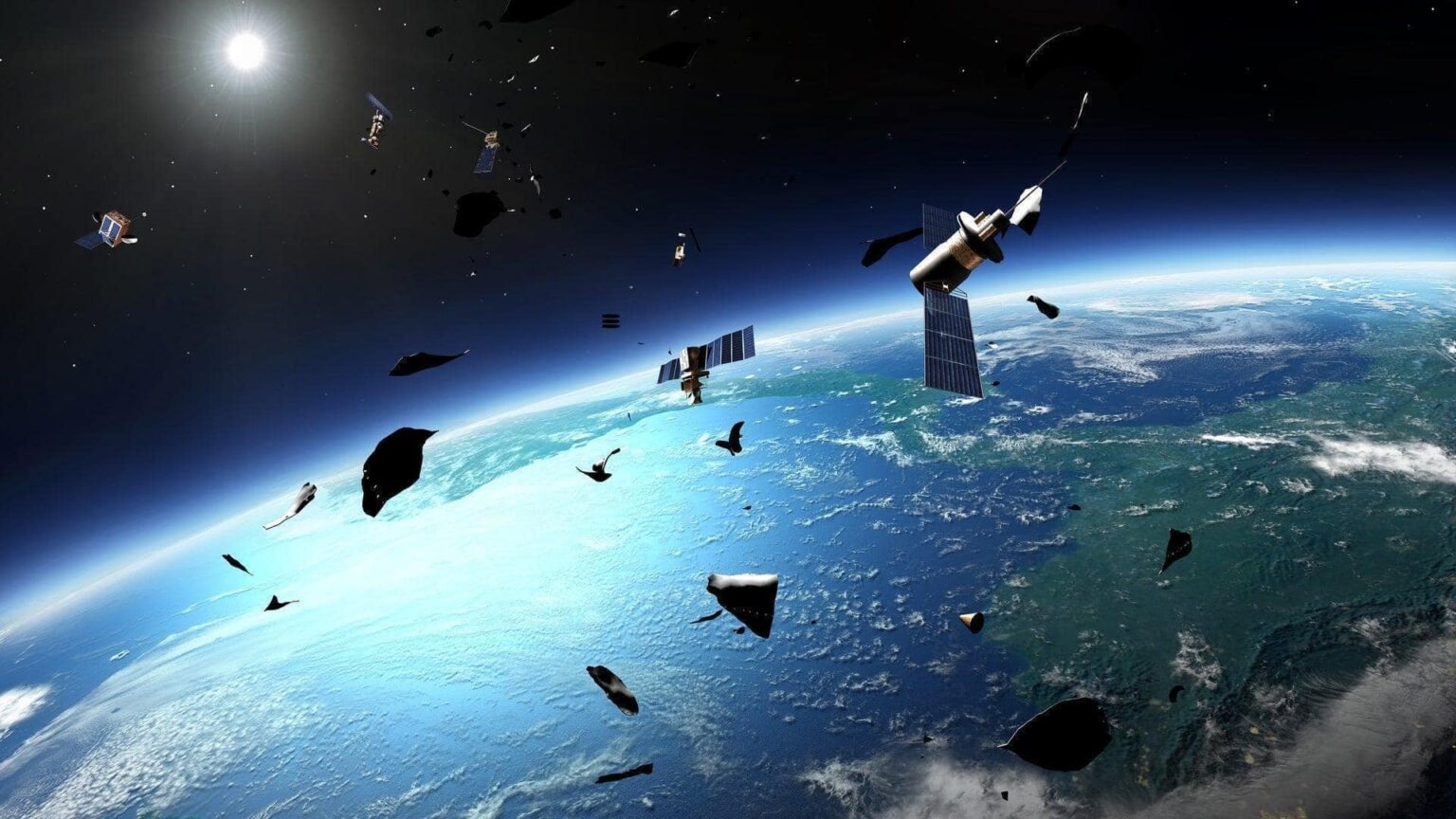
Earth’s orbit is increasingly crowded. With thousands of satellites and rocket bodies now in space — and dozens of objects naturally re-entering the atmosphere each year — the risk from uncontrolled space debris is rising. Traditional radar and optical tracking systems are very effective at monitoring objects while they are still in orbit, but once they begin to burn up and fragment during descent, accurately tracing their path becomes difficult.
Once debris reaches lower altitudes, it travels faster than the speed of sound and produces shock waves that ripple through the ground as it hurtles downward. The Johns Hopkins-led team realized that this seismic signal could serve as a natural tracking marker, helping improve location estimates that radar alone can’t reliably provide after re-entry begins.
How the Method Works
- Sonic Booms Produce Seismic Signals:
As a piece of debris re-enters, it generates a sonic boom — similar to a jet breaking the sound barrier — whose shock wave travels through the ground. Seismometers scattered across a region pick up these vibrations. - Seismic Network Mapping:
By analyzing the timing and intensity of seismic activity across a network of sensors, researchers can map the flight path of the debris as it passes overhead. - Trajectory Reconstruction:
Using data from dozens of sensors, the team reconstructed the 2024 re-entry of the Shenzhou-15 spacecraft’s orbital module, showing that the actual path differed by about 30 km from what orbit-based predictions suggested. - Fragmentation Insights:
The intensity data also provide clues about where and how the object broke apart, offering a more detailed picture of the break-up sequence mid-air.
Real-World Testing: Shenzhou-15 Case Study
In their research, scientists applied the method to data from the re-entry of China’s Shenzhou-15 orbital module on April 2, 2024. By studying seismic signals from more than 120 seismometers in Southern California, the team was able to not only confirm the debris’ general flight path but also refine its landing zone estimate — a significant improvement over radar predictions.
The debris was large enough to pose a potential safety concern, making it an ideal case to demonstrate the new technique’s value.
Benefits Over Traditional Tracking
- Near-Real-Time Data: Seismic detection provides more immediate observations once an object begins re-entry, compared with post-fact radar orbital decay models.
- Improved Accuracy After Burn-Up: Radar and optical systems struggle once the debris fragments and slows; seismic signals continue to register the sonic boom events.
- Supports Rapid Response: Emergency crews or scientists could reach debris fields faster to collect debris — important when hazardous materials are involved.
Broader Safety and Environmental Implications
Uncontrolled space debris occasionally carries toxic or hazardous materials, and fragments can pose risks to aircraft and people on the ground. Faster, more accurate tracking helps authorities estimate where debris might land and assists with environmental monitoring of surviving pieces.
Researchers also highlight benefits such as tracking the movement of particulates in the atmosphere following breakup — critical for public health in the rare event that chemically dangerous fragments reach the surface.
Looking Ahead: A Toolbox for Space Debris
While this seismic method cannot provide advance warnings (because debris arrives before its sonic boom does), it complements existing tools like radar and optical telescopes. Together, they form a more complete toolkit for monitoring a problem that’s only growing as global space activity increases.
The researchers involved have already applied their seismic technique to other recent re-entries, including failures of large SpaceX test vehicles, indicating it’s viable across a range of debris events.
Final Thought
Johns Hopkins’ contribution to this innovative approach — leveraging earthquake science for space safety — highlights how cross-disciplinary research can yield powerful new capabilities for Earth and space alike. As satellite traffic and debris continue to rise, such methods may become indispensable for protecting people, infrastructure, and the environment.