



In a striking new glimpse into Earth’s deep past, scientists have estimated what may be the coldest ocean temperatures in our planet’s history, revealing conditions far harsher than anything seen in modern times. By analyzing ancient rock formations and geochemical clues, researchers now estimate that during the Snowball Earth period—about 700 million years ago—the oceans may have cooled to around 5 °F (–15 °C), much colder than today’s coldest seawater. These findings raise profound questions about how early life managed to survive extreme cold, darkness, and near-global ice cover.
This remarkable discovery not only expands scientists’ understanding of Earth’s climatic extremes over geological time but also highlights the resilience and adaptability of life in the face of near-impossible conditions.
What Was Snowball Earth?
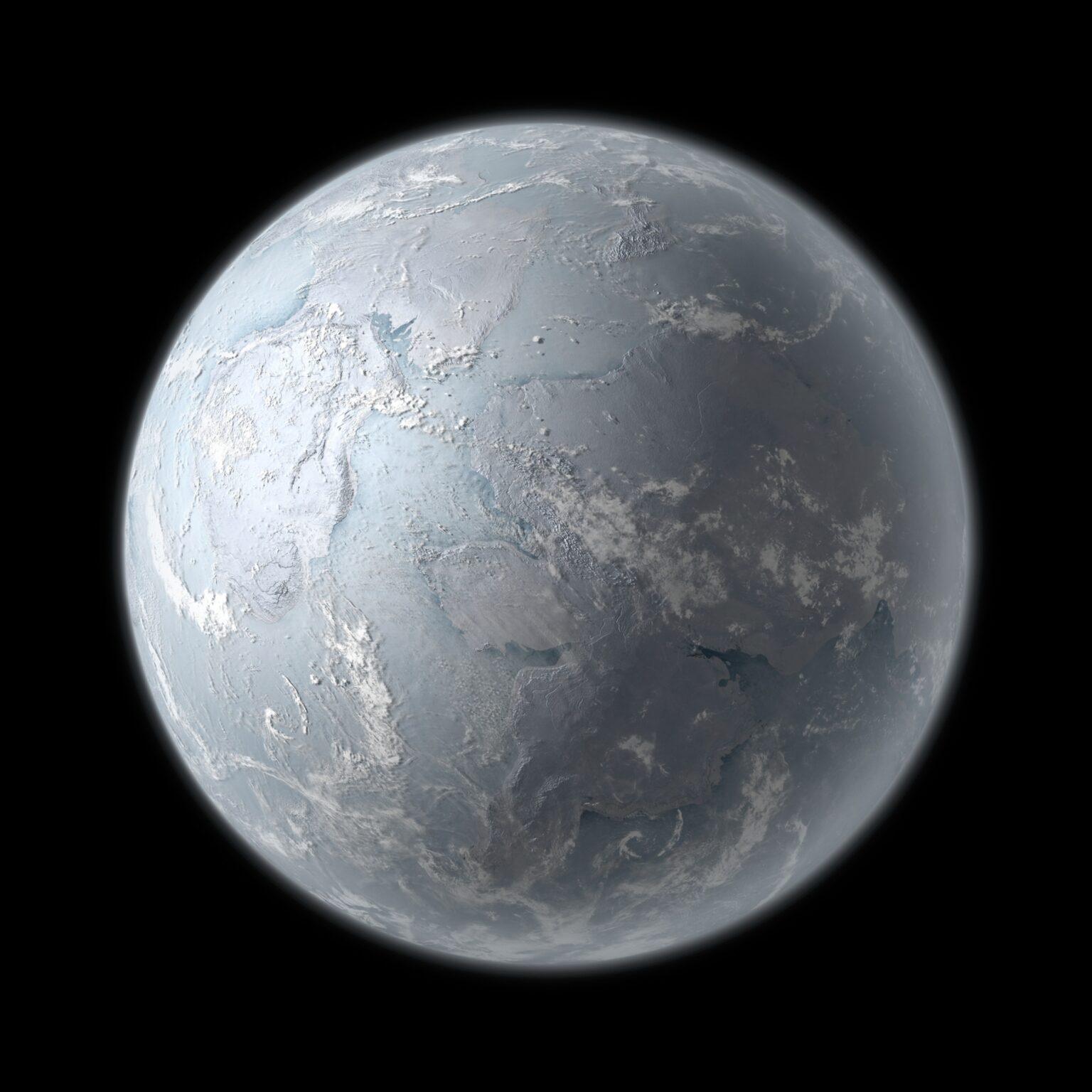
The Snowball Earth hypothesis describes a time during the Cryogenian Period (roughly 850–635 million years ago) when the planet may have been encased in ice from pole to pole. Geological evidence—including glacial deposits found at tropical latitudes—suggests that ice sheets covered both land and the oceans, making Earth’s climate radically different from the one we know today.
Though the idea of a completely frozen world seems dramatic, it helps explain features in the rock record that indicate widespread glaciation and massive changes in ocean chemistry.
How Cold Were the Oceans?
New research published in Nature Communications used innovative geochemical modeling to estimate how cold and salty the ancient oceans were during this deep freeze. The team examined iron-rich layers in ancient seabed rocks, which formed when oxygen suddenly entered seawater and reacted with dissolved iron. The characteristics of these rust deposits pointed to extraordinarily cold water temperatures—far below modern norms.
By combining rock chemistry with physical models of how ocean water behaves at low temperatures, the scientists concluded that seawater may have been around –15 °C (5 °F). This is significantly colder than modern Antarctic deep water, which can get just below freezing (around –2.6 °C) because of salt lowering the freezing point.
To put this in perspective:
- Modern coldest natural seawater: about –2.6 °C (27 °F) around Antarctica.
- Estimated Snowball Earth ocean temperatures: about –15 °C (5 °F) based on geochemical evidence.
These ancient oceans were also thought to be much saltier than today’s, helping them stay liquid despite such frigid temperatures.
Reconciling Extreme Cold and Liquid Water
One of the biggest puzzles has been explaining how the ocean remained liquid at these temperatures. In simple terms, pure freshwater freezes at 0 °C, but salt lowers the freezing point. The higher salinity inferred for ancient oceans would have helped prevent complete freezing, even as the surface ice thickened and sunlight dimmed.
This combination of very low temperatures plus high salinity suggests that the Snowball Earth ocean was far more hostile—and much colder—than conditions under modern ice shelves like those in Antarctica. Yet it remained a liquid environment where some form of life could persist.
How Could Life Survive? The Big Question
Given what we know about modern life—that most organisms struggle at temperatures well above freezing—it’s astounding that life not only existed during Snowball Earth but eventually thrived afterward. Scientists propose several possible survival strategies:
1. Microbial Hardiness and Extreme Adaptations
Some of the simplest organisms known today—like certain bacteria and archaea—are highly tolerant of cold, low-nutrient conditions, and limited light. These extremophiles are found even in isolated brine pockets beneath Antarctic ice sheets, where they live in dark, cold, salty water.
2. Hydrothermal Vent Ecosystems
Deep ocean hydrothermal vents produce heat and chemical energy independent of sunlight. These environments could have provided oases of energy and warmth during global ice cover, allowing life to persist when surface waters were completely frozen.
3. Meltwater Refuge Zones
Even on a frozen planet, local pockets of meltwater could have formed where ice met water or at the margins of ice sheets. These refuges may have allowed simple photosynthetic organisms like cyanobacteria and algae to survive, much like some communities do today in Antarctica’s McMurdo Ice Shelf.
4. Oxygen-Rich Edges of Ice
Meltwater discharge from glaciers could have delivered oxygen into the ocean at the ice margins, creating pockets where aerobic life forms could exploit that energy source.
All these scenarios point to life not only surviving but finding niches—using chemical energy, enduring ice contact, or thriving in extreme salinity and cold.
Why This Discovery Matters
Understanding Snowball Earth and the conditions ancient life endured has multiple scientific implications:
Rewriting Climate Extremes
This research shows Earth’s climate can reach extremes far beyond what’s recorded in the modern era, with oceans approaching temperatures previously thought impossible. Such knowledge helps scientists model ancient climate systems and better understand how Earth’s climate evolves over geological timescales.
Life’s Resilience and Evolutionary Insight
If life survived such conditions, it suggests remarkable resilience and flexibility in early life forms. This has implications not only for Earth history but also for astrobiology, where scientists speculate about life on other icy worlds like Europa or Enceladus.
Context for Modern Climate Extremes
While the Snowball Earth was driven by ancient tectonics and different atmospheric conditions, this finding contrasts sharply with current global warming trends—where oceans are hitting record high temperatures in recent decades due to greenhouse gas increases. In fact, 2025 saw ocean heat content reach a new modern-era record, demonstrating how rapidly Earth’s oceans can respond to climate forcing.
Connecting Ancient and Modern Oceans
It’s worth noting how dramatically the ocean environment has shifted over time:
- Ancient extreme cold like Snowball Earth’s oceans reflects dramatic climatic swings before complex life was established.
- Modern warming trends—with oceans accumulating more heat than ever recorded—are tied to human-driven climate change, affecting ecosystems from coral reefs to polar seas.
Both extremes—frigid and warming—show just how dynamic Earth’s climate system can be. But while ancient life had millions of years and evolutionary flexibility to adapt, modern ecosystems and human societies must contend with rapid change over decades to centuries. The contrast underscores the urgency of understanding and responding to today’s climate pressures.
Conclusion: Life’s Tenacity in an Unforgiving Ocean
The discovery that Earth’s oceans may once have been as cold as –15 °C with exceptionally high salinity challenges our understanding of what environments can support life. Yet the fossil and geochemical record shows that life did survive and rebound after these extreme glaciations.
From hidden hydrothermal refuges to adaptations seen in modern extremophiles, researchers are piecing together the many ways early organisms persisted through near-global ice ages. This story not only deepens our appreciation of life’s resilience but also enriches our perspective on Earth’s long and turbulent environmental history.
Whether examining the limits of life on a snow-covered world or tracking modern ocean warming trends, the oceans continue to be the most vital and dynamic frontier in understanding our planet’s past—and its future.