




For decades, the standard response to a chilly room was to turn on a convection heater and wait for the air to warm up. But as energy prices rise and our understanding of “comfort” evolves, we are moving toward Radiant Heating. Unlike traditional heaters that try to warm every cubic inch of air in a room (only for it to rise to the ceiling and escape), radiant heaters work like the sun: they heat you directly.
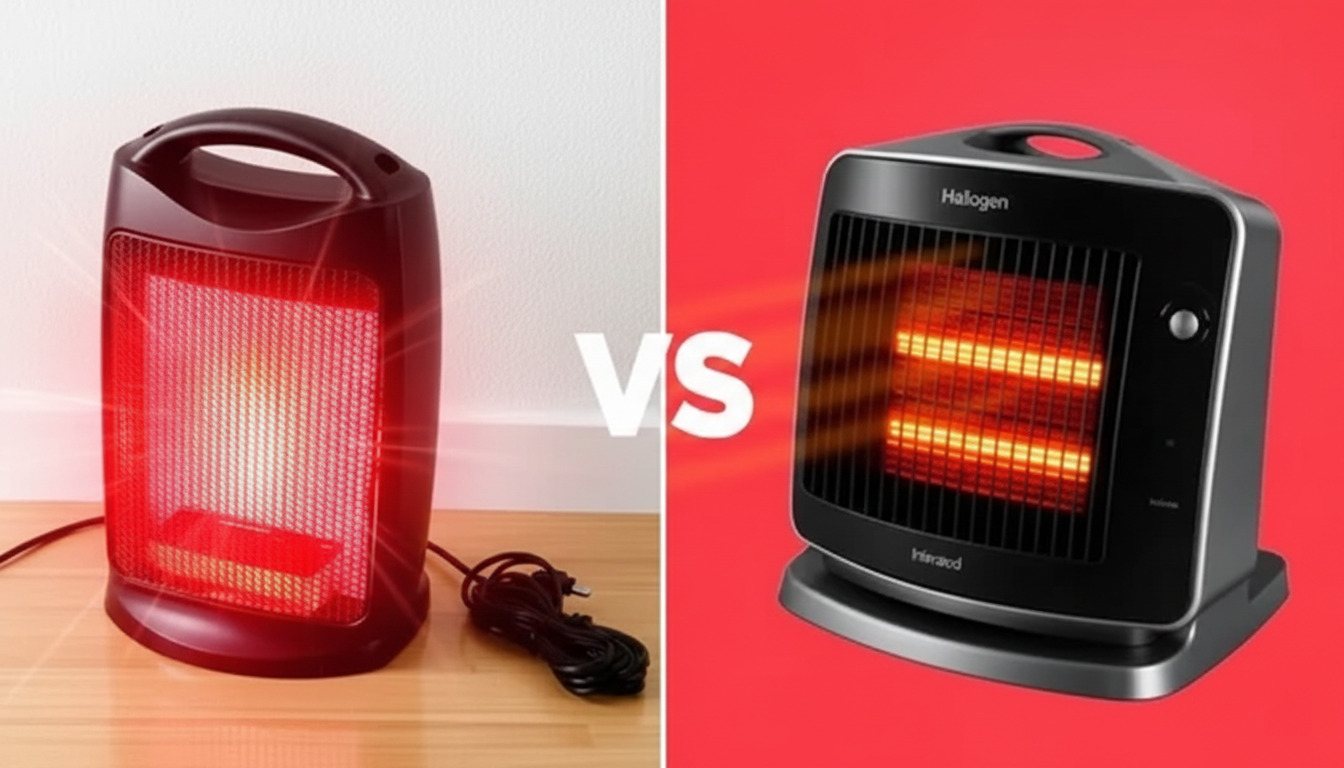
Two technologies dominate this space: Halogen and Infrared. While both use electromagnetic waves to deliver warmth, the way they interact with your body and your living space couldn’t be more different.
1. The Halogen Experience: “The Instant Fireplace”
Halogen heaters are the most common form of radiant heating found in Indian households. They use halogen-filled quartz tubes that glow intensely the moment they are switched on.
The Instant Gratification Factor
The biggest selling point of a halogen heater is speed. If you have just come in from a rainy, 5°C evening, a halogen heater provides near-instant relief. Because it operates in the “short-wave” infrared spectrum, the heat is high-intensity and highly directional.
- The “Spot Heating” King: It is perfect for sitting at a desk or watching TV. It creates a “bubble” of warmth that is fierce and immediate.
The Drawbacks of Intensity
However, that same intensity is what leads many to “rethink” their comfort.
- The “Burning Face” Syndrome: Because halogen heat is so focused, it can often feel like your front is roasting while your back is freezing. Prolonged exposure can lead to dry eyes and skin irritation.
- The Light Pollution: Halogen tubes emit a bright, orange-red light. While cozy for some, it can be incredibly distracting in a dark bedroom or a home theater setup.
- Fragility: Halogen bulbs are high-pressure tubes that are sensitive to oils from your skin and physical shocks. They have a shorter lifespan compared to solid-state infrared panels.
2. The Infrared Experience: “The Gentle Sun”
In 2026, Far-Infrared (FIR) panels and carbon heaters are becoming the preferred choice for long-term comfort. These heaters don’t use glowing bulbs; instead, they use large surfaces (often made of carbon or ceramic) to emit waves that are much further down the light spectrum.
Thermal Mass and Even Heat
Infrared heaters don’t just heat your skin; they heat the thermal mass of the room. They warm the walls, the furniture, and the floor.
- Secondary Radiation: Once your sofa and walls are warm, they start emitting heat back into the room. This creates a stable, “wrap-around” warmth that feels much more natural—similar to a sunny day in spring.
- The “No-Glow” Advantage: High-end infrared heaters emit little to no visible light, making them perfect for bedrooms. You get the warmth without the artificial glare.
The Health Perspective
Infrared heat is often used in physical therapy because “Far-Infrared” waves can penetrate slightly deeper into the muscle tissue. It doesn’t dry out the air as much as a halogen heater or a fan blower, making it the superior choice for people with respiratory issues or sensitive skin.
3. The Efficiency Battle: Halogen vs. Infrared
When we talk about efficiency in 2026, we aren’t just talking about wattage; we are talking about Effective Heat Delivery.
| Feature | Halogen Heater | Infrared (Far-IR) Heater |
| Heat-up Time | Instant (1-5 seconds) | Gradual (5-10 minutes) |
| Best For… | Short-term spot heating | All-day comfort / Large rooms |
| Light Output | High (Bright Orange) | None to Low |
| Air Quality | Can feel dry | Maintains humidity |
| Safety | High surface temp (Burn risk) | Lower surface temp (Safer for pets) |
| Energy Use | Efficient for 1 person | Efficient for the whole space |
The Running Cost Reality
While a 1200W Halogen and a 1200W Infrared panel use the same amount of electricity, the Infrared heater is often cheaper to run over a 24-hour period. Why? Because it features a thermostat that turns the unit off once the “thermal mass” of the room is warm. A halogen heater, being directional, usually has to stay on constantly for you to feel the effect.
4. Why “Comfort” is Being Redefined
The move from Halogen to Infrared represents a shift in how we value our indoor environment.
1. The Psychological Shift: We are moving away from the “blast of heat” model. Much like a high-end HVAC system, modern infrared heating is designed to be invisible. You don’t see it, you don’t hear it, and you don’t feel a “hot spot”—you just realize you aren’t cold anymore.
2. Safety in the Modern Home: Halogen heaters are notorious fire hazards if knocked over or placed too close to curtains. Modern infrared panels can be wall-mounted (looking like a piece of art or a mirror), keeping the heating element well out of reach of children and pets.
5. The Verdict: Which One Should You Buy?
Choose a Halogen Heater if:
- You are on a strict budget (units are very cheap upfront).
- You only need heat for 15-20 minutes at a time (e.g., getting dressed in the morning).
- You live in a very drafty space where you can’t “trap” heat.
Choose an Infrared Heater if:
- You want a permanent, healthy heating solution for a bedroom or living room.
- You have sensitive skin or suffer from winter allergies.
- You want to lower your monthly electricity bill through better thermal management.
- You prefer a minimalist aesthetic with no bright lights or noisy fans.
6. Closing Thoughts: The Future of Winter
As we look toward the 2026-2027 winter season, the “rethinking” of heating comfort is clearly leaning toward Infrared. While Halogen served us well as a quick-fix solution, the consistent, health-conscious, and energy-efficient nature of Far-Infrared technology is setting a new standard for what it means to be “cozy.”
Investing in the right heater isn’t just about the price tag at the store; it’s about the quality of the air you breathe and the stability of the warmth you feel. This winter, don’t just settle for “hot”—aim for “comfortable.”
Quick Selection Checklist
- Instant Heat? → Halogen.
- Overnight Heat? → Infrared.
- Shared Family Space? → Infrared.
- Portable Spot Heat? → Halogen.
- No Light/No Noise? → Infrared.