




SpaceX has successfully launched another batch of satellites for its ambitious Starlink project, continuing the company’s efforts to expand high-speed internet coverage across the globe. The launch marks yet another milestone for the private space company founded by Elon Musk, as it strengthens its rapidly growing satellite constellation in low Earth orbit.
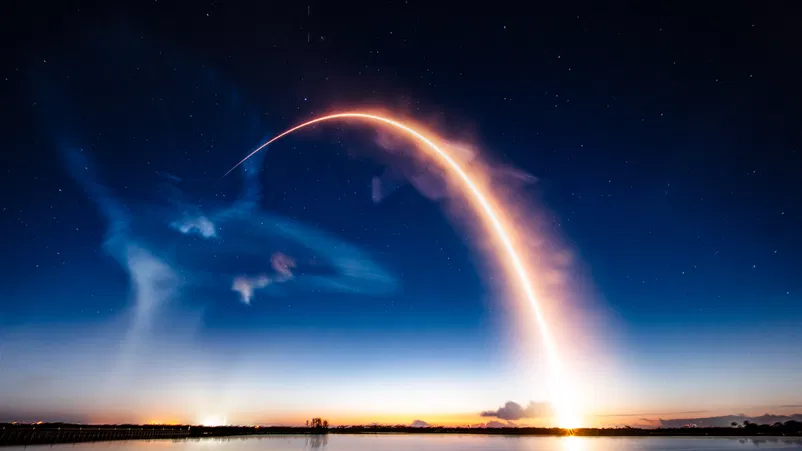
The mission lifted off smoothly aboard a Falcon 9 rocket from Cape Canaveral Space Force Station in Florida. The successful launch delivered dozens of new satellites into orbit, bringing the company one step closer to its goal of providing reliable internet access to even the most remote parts of the planet.
A Smooth and Precise Launch
The Falcon 9 rocket launched during a carefully planned window, climbing through clear skies as spectators and viewers watched the mission unfold live. Within minutes of liftoff, the rocket’s first stage separated and began its return journey to Earth, demonstrating the reusable rocket technology that has become a hallmark of SpaceX operations.
The booster successfully landed on a drone ship stationed in the Atlantic Ocean, marking another successful recovery for the company. Reusability has been a key factor in reducing the cost of space launches, allowing SpaceX to conduct missions more frequently and efficiently.
Meanwhile, the rocket’s second stage continued carrying the Starlink satellites toward their designated orbit.
Deployment of the Starlink Satellites
Approximately an hour after liftoff, the rocket began deploying the Starlink satellites into low Earth orbit. The satellites were released in a carefully controlled sequence, gradually spreading out as they began their journey to their operational positions.
Once in orbit, the satellites will use onboard propulsion systems to maneuver into their designated slots within the growing Starlink network. Over the next several weeks, engineers will monitor the satellites to ensure they are functioning correctly and communicating with ground stations.
This process is crucial to maintaining the reliability and stability of the constellation.
What Is Starlink?
Starlink is a satellite internet system designed to deliver high-speed broadband connectivity to areas where traditional internet infrastructure is limited or unavailable. Instead of relying on cables or cell towers, Starlink uses a network of satellites orbiting Earth to transmit internet signals directly to ground terminals.
This approach allows people in remote regions, rural communities, ships at sea, and even aircraft to access reliable internet service.
Since its initial launches in 2019, the Starlink constellation has grown rapidly, with thousands of satellites already in orbit.
Bridging the Global Connectivity Gap
One of the main goals of Starlink is to reduce the digital divide by providing internet access to underserved regions.
In many parts of the world, building traditional broadband infrastructure is extremely expensive due to geographic challenges such as mountains, forests, or sparsely populated areas. Satellite internet offers a potential solution by bypassing these obstacles.
Starlink has already been deployed in numerous countries and has played a role in providing connectivity during emergencies and natural disasters.
Applications Beyond Home Internet
While many users rely on Starlink for home internet service, the technology has also found applications in several other sectors.
Maritime Connectivity
Ships operating in remote oceans often struggle with slow or unreliable internet connections. Starlink’s satellite network provides a high-speed alternative, allowing crews and passengers to stay connected even in the middle of the sea.
Aviation
Airlines are increasingly exploring satellite internet solutions to provide passengers with faster onboard Wi-Fi. Starlink’s low-Earth-orbit satellites can deliver lower latency compared to traditional satellite systems.
Disaster Response
During natural disasters, ground infrastructure can be damaged or destroyed, cutting off communication. Portable Starlink terminals can quickly restore connectivity for emergency responders and affected communities.
Reusable Rocket Technology
One of the most remarkable aspects of the mission was the successful landing of the Falcon 9 booster. SpaceX pioneered the concept of reusable orbital rockets, allowing rocket stages to return to Earth and be used again in future missions.
This innovation has dramatically reduced launch costs and increased the frequency of space missions. Instead of discarding rockets after a single flight, SpaceX refurbishes and relaunches them multiple times.
The recovered booster from this mission will likely be prepared for another launch in the near future.
The Growing Starlink Constellation
With each new launch, the Starlink network becomes larger and more capable. The company plans to deploy tens of thousands of satellites over the coming years to create a dense and reliable coverage grid around the planet.
This massive constellation will enable faster speeds, lower latency, and improved service for users around the world.
However, the rapid expansion has also sparked discussions among astronomers and scientists about the potential impact of large satellite constellations on night sky observations and space traffic management.
Addressing Astronomical Concerns
Astronomers have raised concerns that bright satellites could interfere with telescopes observing deep space. In response, SpaceX has worked on several mitigation strategies, including:
- Darker satellite coatings to reduce brightness
- Sunshades designed to minimize reflected sunlight
- Improved satellite orientation to limit visibility from Earth
The company continues to collaborate with the scientific community to address these issues while expanding the Starlink network.
Competition in the Satellite Internet Market
Starlink is currently one of the most advanced satellite internet systems in operation, but it is not the only project aiming to provide global connectivity from space.
Several other companies and organizations are developing similar networks, leading to growing competition in the satellite broadband industry.
Despite this competition, SpaceX’s rapid launch capabilities and reusable rockets give it a significant advantage in deploying satellites quickly and efficiently.
Looking Ahead
The successful Starlink launch represents another step forward in SpaceX’s broader vision of expanding human access to space and improving global connectivity. With each mission, the company refines its technology and strengthens its infrastructure in orbit.
Future launches are expected to continue at a rapid pace as SpaceX works toward completing the full Starlink constellation.
At the same time, the company is pursuing other ambitious projects, including deep-space exploration missions and the development of next-generation spacecraft.
Conclusion
The latest Starlink mission highlights the remarkable pace of innovation in the modern space industry. By successfully launching and deploying another batch of satellites, SpaceX continues to expand a network that could transform how people connect to the internet worldwide.
From remote villages and ships at sea to aircraft and disaster zones, Starlink has the potential to bring reliable connectivity to places that were once beyond the reach of traditional networks.
As SpaceX pushes forward with its ambitious plans, each successful launch moves the world closer to a future where fast internet access is truly global—delivered not through cables in the ground, but through satellites orbiting high above the Earth.