



In the thin air of the Himalayas, “warmth” is a literal survival metric. In 2026, travel blankets have evolved beyond simple fleece throws into technical pieces of gear utilizing aerospace-grade insulation and ripstop fabrics. From the Langtang Valley to the Everest Base Camp, here are the top 10 picks for your next expedition.
The “Puffy” Powerhouses (Down & Synthetic)
These blankets mimic the construction of a down jacket. They are the warmest options available and are designed specifically for mountain environments.
1. Western Mountaineering Cloud 9 Comforter
- Best For: Extreme Cold & Sleeping Bag Alternatives
- Insulation: 800-fill European Goose Down
- The Lowdown: This is the “Gold Standard.” Weighing 25 oz (700g), it uses the same high-end down found in elite sleeping bags. It packs into a tiny 6″x10″ sack but provides a level of loft that feels like sleeping in a cloud. It even features corner straps to secure it to your sleeping pad.
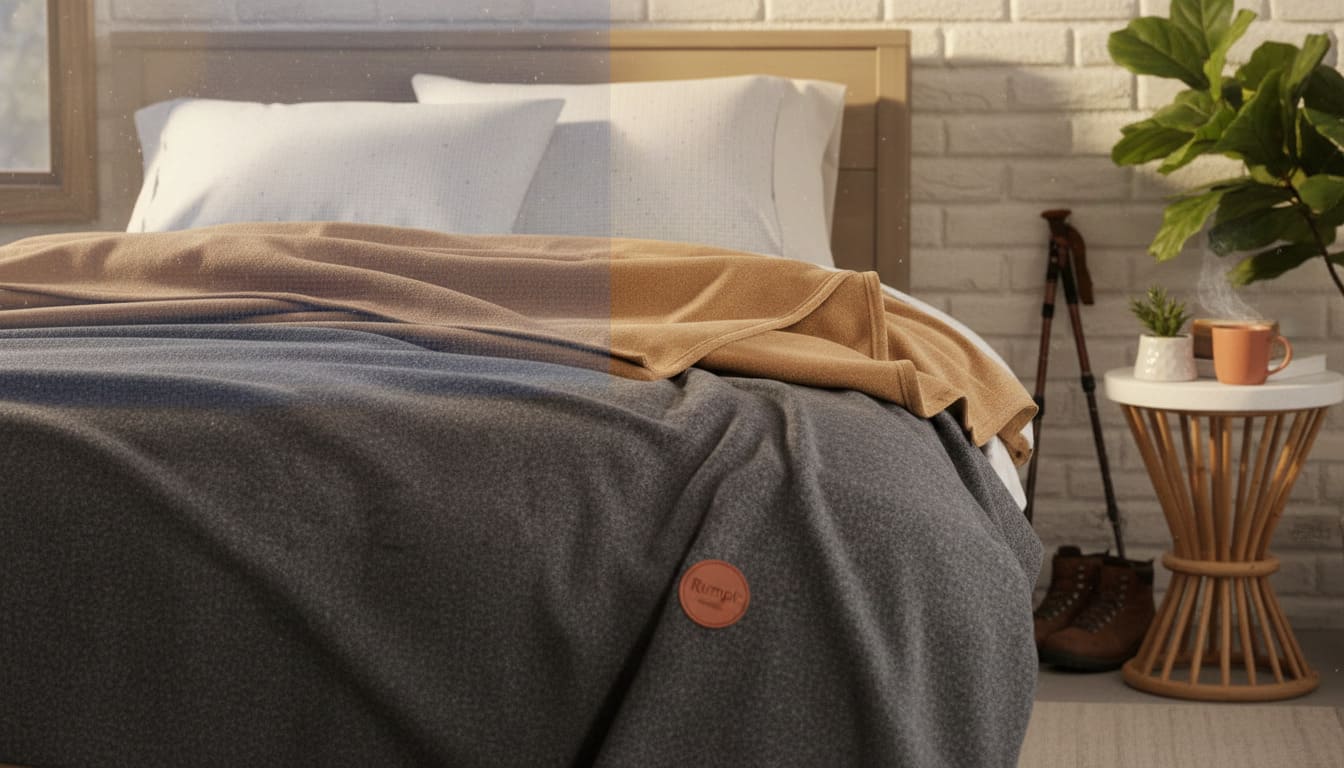
2. Rumpl NanoLoft Travel Blanket
- Best For: Sustainability & All-Weather Reliability
- Insulation: NanoLoft (100% Post-consumer Recycled Synthetic)
- The Lowdown: If you’re trekking in the monsoon or damp regions like the Annapurna Circuit, synthetic is king. Rumpl’s NanoLoft mimics down’s structure but retains warmth even if it gets damp from tent condensation. Plus, its 20D ripstop nylon shell is water-resistant and incredibly durable.
3. Get Out Gear Camping Blanket
- Best For: Budget-Conscious Backpackers
- Insulation: 650-fill power Down
- The Lowdown: This is the “bang-for-your-buck” hero. It offers professional-grade 20D ripstop nylon and genuine down insulation at a fraction of the cost of boutique brands. It’s lightweight, comes with a cape clip for hands-free warmth at camp, and is water-resistant.
The Wearable Wonders
In a teahouse, you don’t just want to be warm in bed; you want to be warm while eating Dal Bhat or journaling.
4. Therm-a-Rest Honcho Poncho (2026 Edition)
- Best For: Camp Versatility
- Feature: 3-in-1 Design (Blanket, Poncho, Pillow)
- The Lowdown: The 2026 version is a trekker’s dream. It uses PFAS-free DWR waterproofing and breathable synthetic insulation. It functions as a cozy poncho with a hood for walking around camp and unsnaps into a full-sized blanket at night. When packed into its own pocket, it doubles as a firm camping pillow.
5. ZeroGrid Wearable Travel Blanket
- Best For: Long Layovers & Low Altitudes
- Feature: Integrated Zippers
- The Lowdown: This is the most versatile option for the “travel” part of your trek. It features dual zippers that allow it to be used as a poncho, a blanket, or a hand warmer. It’s made of plush microfiber that feels great against the skin after a long day of hiking.
The Lightweight Tech-Fleece
Sometimes you don’t need a bulky “puffy.” These blankets are perfect as liners or for use in lower-altitude lodges.
6. Cocoon CoolMax Blanket
- Best For: Moisture Management
- Material: 100% CoolMax Polyester
- The Lowdown: If you are a “hot sleeper” or trekking in humid valleys, the CoolMax is essential. It is ultra-compact and specifically designed to wick moisture away from your body while keeping you warm. It’s the ultimate “peace of mind” layer for teahouse beds.
7. iClimb Thinsulate Blanket
- Best For: Windproof Performance
- Material: 3M Thinsulate + 20D Nylon
- The Lowdown: Using world-class 3M Thinsulate technology, this blanket provides the warmth of a much thicker fleece while remaining incredibly thin. Its nylon shell makes it windproof, which is a lifesaver when the Himalayan evening winds start howling through the cracks of a wooden lodge.
The Luxury & Emergency Picks
8. Pure Cashmere Mongolian Travel Wrap
- Best For: The “Treat Yourself” Trekker
- Material: 100% Pure Mongolian Cashmere
- The Lowdown: While not a “technical” gear piece, nothing beats the warmth-to-weight ratio of pure cashmere. It’s unbelievably soft, naturally odor-resistant (perfect for 10-day treks), and functions as a stylish scarf on the flight and a warm wrap at high altitudes.
9. Matador Pocket Blanket
- Best For: Ground Insulation & Picnics
- Feature: Integrated Ground Stakes
- The Lowdown: While not an insulation blanket for warmth, this is an essential “support” blanket. It’s a waterproof barrier that fits in your pocket. Use it to sit on the damp grass during a lunch break or as a footprint under your gear to keep it dry.
10. SOL Emergency Bivvy/Blanket
- Best For: Safety (Mandatory for High Passes)
- Material: Vacuum-Metalized Polyethylene
- The Lowdown: This is the one blanket you hope you never use. Weighing almost nothing, it reflects 90% of your body heat. If you get stuck on a high pass like Thorong La after dark, this “blanket” is the difference between life and death.
Trekker’s Guide: How to Choose Your Layer
Choosing a blanket for the Himalayas is different than choosing one for a flight to Paris. Here is the medical and technical advice for 2026:
Down vs. Synthetic: The Great Debate
- Choose Down if: You are going above 4,000m where the air is dry and every gram in your backpack counts. It compresses smaller and is significantly warmer per ounce.
- Choose Synthetic if: You are trekking in the monsoon season or regions like Sikkim/Bhutan where humidity is high. Synthetic maintains its “loft” and warmth even when wet.
The “Dark Shade” Strategy
As noted in recent travel insights from Hindustan Times, seasoned trekkers prefer darker shades (Navy, Charcoal, Forest Green). Why?
- Stain Resistance: Mountain lodges and campsites are dusty.
- Solar Heat: If your blanket gets damp, a dark-colored blanket will dry much faster when laid out in the high-altitude sun.
Weight & Volume
Your blanket should never weigh more than 1 kg (2.2 lbs). Ideally, you want a technical blanket that packs down to the size of a 1-liter water bottle.
Maintenance on the Trail
The Himalayas are beautiful but harsh on gear.
- Daily Airing: At every lunch break, if the sun is out, pull your blanket out for 5 minutes. This releases the moisture trapped from your body heat the night before.
- The Stuff Sack Rule: Never fold a down or puffy blanket. Always stuff it. Folding creates “cold spots” by repeatedly creasing the insulation in the same place.
Conclusion: The Unsung Hero of Your Pack
When you’re standing at the edge of a Himalayan ridge, watching the sunset over the peaks, the temperature can drop 10 degrees in a matter of minutes. In that moment, your travel blanket isn’t just an accessory; it’s your comfort zone.
Whether you opt for the elite warmth of the Western Mountaineering Cloud 9 or the versatile Honcho Poncho, adding a high-quality travel blanket to your kit ensures that you spend your nights recovering for the next day’s climb, rather than shivering through them.
Himalayan Blanket Checklist
- Weight: Under 800g (ideal).
- Insulation: Down for dry cold; Synthetic for damp/snow.
- Shell: 20D Ripstop Nylon (Windproof).
- Versatility: Look for “Cape Clips” or “Snap Buttons.”
- Safety: Always carry an emergency foil blanket in your first-aid kit.