



In 2020, India’s total warehousing stock sat at roughly 230 million sq ft. Fast forward five years, and that number has more than doubled to 610 million sq ft. This isn’t just growth; it’s a total structural overhaul. Driven by the “Make in India” initiative, a booming e-commerce sector, and a post-pandemic obsession with supply chain resilience, the humble warehouse is now the hottest asset class in Indian real estate.
1. Tier I Dominance: The “82% Fortress”
Despite the buzz around smaller towns, the heavy lifting is still being done by India’s primary consumption hubs. The top eight cities—Delhi-NCR, Mumbai, Pune, Bengaluru, Chennai, Hyderabad, Ahmedabad, and Kolkata—account for 498 million sq ft of the total stock.
- Delhi-NCR & Mumbai: These two giants alone contribute nearly 45% of the Tier I share. Their proximity to major ports (JNPT for Mumbai) and massive consumer bases makes them indispensable for “regional distribution centers.”
- The Manufacturing Surge (Pune & Chennai): These cities have seen a pivot toward “Industrial Warehousing.” With the PLI (Production Linked Incentive) schemes for automotive and electronics in full swing, warehouses here are increasingly serving as component staging areas for factories.
- The Southern Tech Belt (Bengaluru & Hyderabad): Driven by high-value retail and electronics e-commerce, these cities are witnessing the highest concentration of “Grade A” multi-story warehouses to maximize expensive land parcels.
2. The Rise of Grade A: Quality Over Quantity
A significant trend in 2025 is the “flight to quality.” For the first time, Grade A facilities comprise 53% of the total stock.
- Institutional Backing: Nearly 38% of this quality stock is now owned or managed by institutional investors and global private equity firms like Blackstone, ESR, and GLP. This has brought international standards in floor load capacity, ceiling heights (12 meters+), and fire safety.
- The ESG Mandate: Multi-national occupiers (MNCs) are no longer renting “godowns.” They require LEED-certified buildings with solar rooftops, rainwater harvesting, and EV charging stations for their last-mile fleets.
- The Efficiency Premium: While Grade A rents are 20-30% higher, 3PL (Third-Party Logistics) companies prefer them because the higher vertical stacking and superior flooring allow for 40% more storage efficiency per square foot.
3. The Occupier Shift: 3PL and Manufacturing Lead the Way
The “who’s who” of warehouse tenants has changed. While e-commerce was the primary driver in 2021, the 2025-26 landscape is more balanced.
- 3PL (Third-Party Logistics): Accounting for roughly 32-41% of leasing activity, 3PL players like Delhivery, Mahindra Logistics, and Blue Dart are the new kings of the floor. Companies are increasingly outsourcing their entire logistics stack to these experts to save on capital expenditure.
- Manufacturing & Engineering: Driven by the “China Plus One” strategy, manufacturing-led warehousing has surged. Electronics, engineering goods, and white goods now take up nearly 25% of new space, moving away from pure retail storage.
- Quick Commerce (The “Dark Store” Boom): In 2025, Swiggy, Zepto, and Blinkit have fundamentally changed the “last mile.” While they use smaller “micro-warehouses” (4,000–8,000 sq ft), the sheer volume of these urban units has contributed significantly to the “total stock” calculations in Tier I cities.
4. The Tier II Awakening: The “Next 112 Million”
While they only hold an 18% share, the 14 emerging Tier II cities (including Lucknow, Nagpur, Kochi, and Chandigarh-Rajpura) are the fastest-growing segment.
- Geographic Diversification: 2025 saw companies moving closer to the “next 100 million” consumers. Cities like Lucknow and Kochi have each crossed 1 million sq ft of annual absorption for the first time.
- The Nagpur Factor: Located at the “Zero Mile” of India, Nagpur is emerging as the country’s multi-modal heart. With the Samruddhi Expressway and improved rail connectivity, it has become the preferred “National Distribution Hub” for many FMCG majors.
- Cost Efficiencies: Land costs in Tier II cities are often 40-60% lower than in Tier I fringes, allowing 3PL companies to offer much more competitive rates to their clients.
5. Technology: From Storage Boxes to Smart Hubs
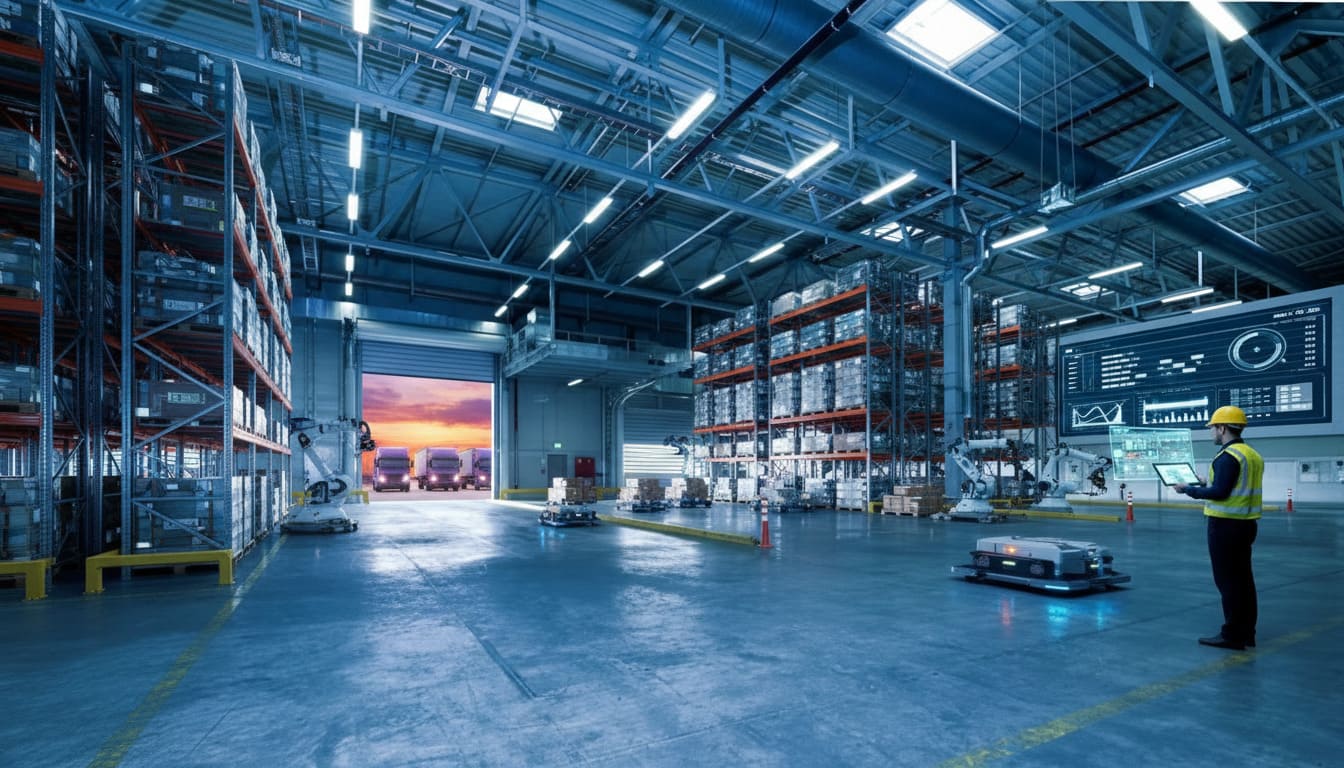
By 2030, industry projections suggest that 76% of Indian warehouses will be automated, up from barely 10% in 2025.
- Robotics & AS/RS: In the high-demand corridors of Delhi-NCR and Bengaluru, Automated Storage and Retrieval Systems (AS/RS) are becoming standard. These systems allow for 24/7 operations and near-zero error rates in picking and packing.
- AI-Driven WMS: Modern Warehouse Management Systems (WMS) now use predictive AI to position high-velocity SKUs (Stock Keeping Units) closer to the loading docks based on anticipated demand from the upcoming AI Summit or wedding seasons.
- The 2-Year Payback: Despite high initial costs, the ROI (Return on Investment) for warehouse automation in India has dropped to just 2 to 3 years, making it a strategic necessity rather than a luxury.
6. Government Policy: The Wind Beneath the Wings
The 610 million sq ft milestone wouldn’t have been possible without three major policy pillars:
- PM Gati Shakti: The National Master Plan for multi-modal connectivity has streamlined the approval process for “Logistics Parks.”
- Unified Logistics Interface Platform (ULIP): This digital layer allows real-time tracking across sea, air, and road, making “Just-in-Time” warehousing a reality for Indian manufacturers.
- Safe Harbour for MNCs: The Union Budget 2026 proposed a “safe harbour” regime for component warehousing, reducing tax friction for global electronics firms like Jabil and Foxconn, encouraging them to hold massive inventory stocks within Indian borders.
7. Future Outlook: The Road to 850 Million Sq Ft
As we look toward 2030, the trajectory is clear. India is on track to add another 240 million sq ft in the next five years.
- Consolidation: We expect to see smaller, unorganized “godowns” being phased out or retrofitted into Grade A spaces as compliance and safety norms tighten.
- Sustainability: “Green Warehousing” will move from a “good-to-have” to a legal requirement. Carbon-neutral logistics parks will become the standard for institutional investors.
- Multi-Modal Integration: The next wave of “Mega Parks” (100+ acres) will be built directly adjacent to Dedicated Freight Corridors (DFCs) and Inland Waterways, drastically reducing the cost of moving goods from the warehouse to the consumer.
Conclusion: India’s Logistics Powerhouse Status
Crossing the 610 million sq ft mark is a “coming of age” moment for the Indian warehousing sector. It signifies that India is no longer just a “back-office” for the world; it is a massive consumption and production engine.
While the Tier I cities currently hold the fort, the decentralization into Tier II and III markets is the real story of 2026. For investors, developers, and businesses, the message is simple: the warehouse is no longer just a building—it is a technology-driven, multi-billion-dollar fulfillment ecosystem that is powering the “New India” economy.
Executive Summary Checklist
- Total Stock: 610 Million Sq Ft (as of end-2025).
- Market Share: Tier I (82%), Tier II (18%).
- Quality Leader: Grade A facilities now make up 53% of the total.
- Primary Drivers: 3PL (41%), E-commerce, and Manufacturing.
- Emerging Hubs: Nagpur, Lucknow, and Kochi leading the Tier II surge.
- Tech Trend: Automation adoption expected to hit 76% by 2030.